
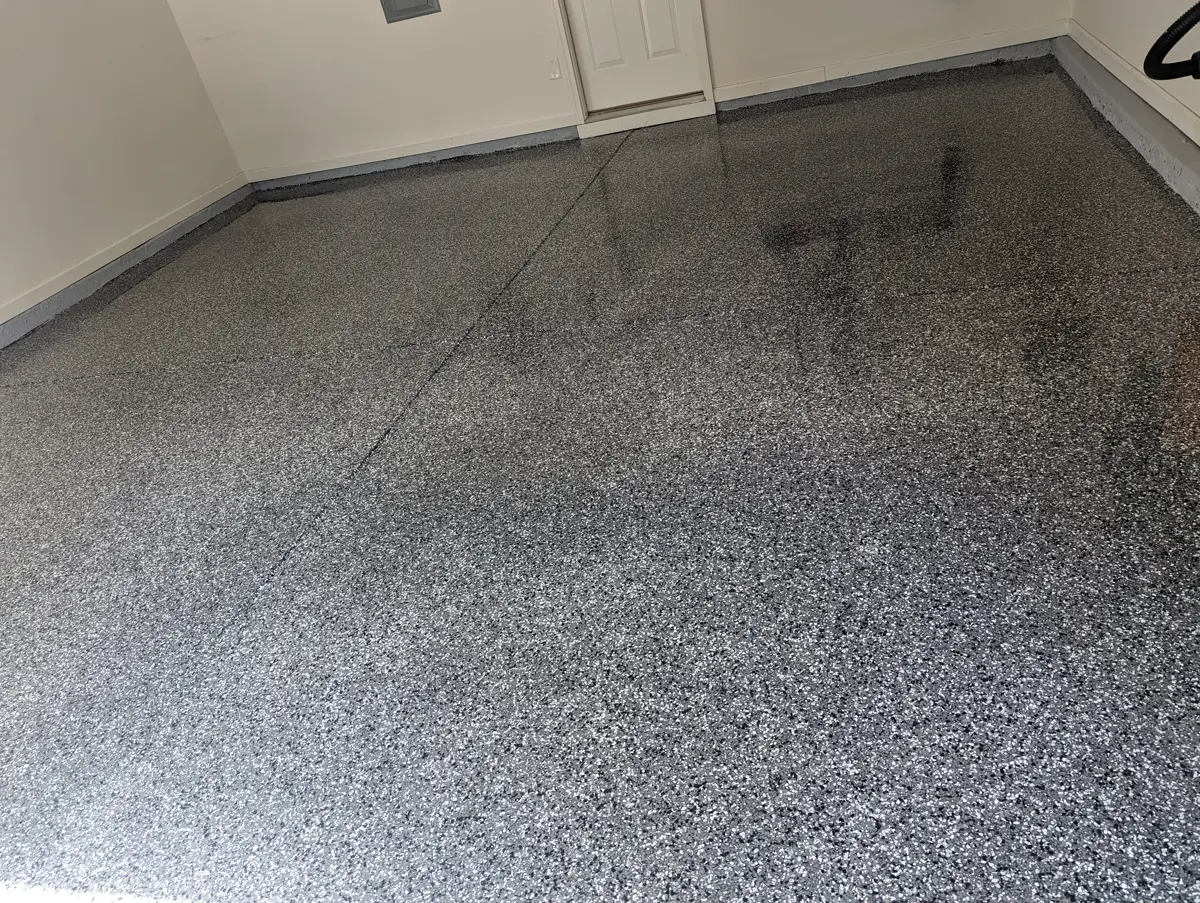
Garage floor coating guide
Garage floor coating and epoxy garage floors
A garage floor has an unusual job. It takes the weight of a vehicle on a few small patches of rubber, lives with whatever the concrete has absorbed over the years, sits open to daylight and weather whenever the door goes up, and is still expected to look like part of the house.
This page explains how a garage floor coating project is put together and what actually separates one proposal from another. Epoxy Pro Leads is an independent education and contractor-introduction resource for flooring buyers; we do not install floors, and the system for your slab is the contractor's decision rather than ours.
An epoxy garage floor is usually a layered system, not a single product.
What the concrete turns out to be decides more than the finish does.
Two quotes at the same price can describe very different work.
The system
What a professional garage floor coating actually is
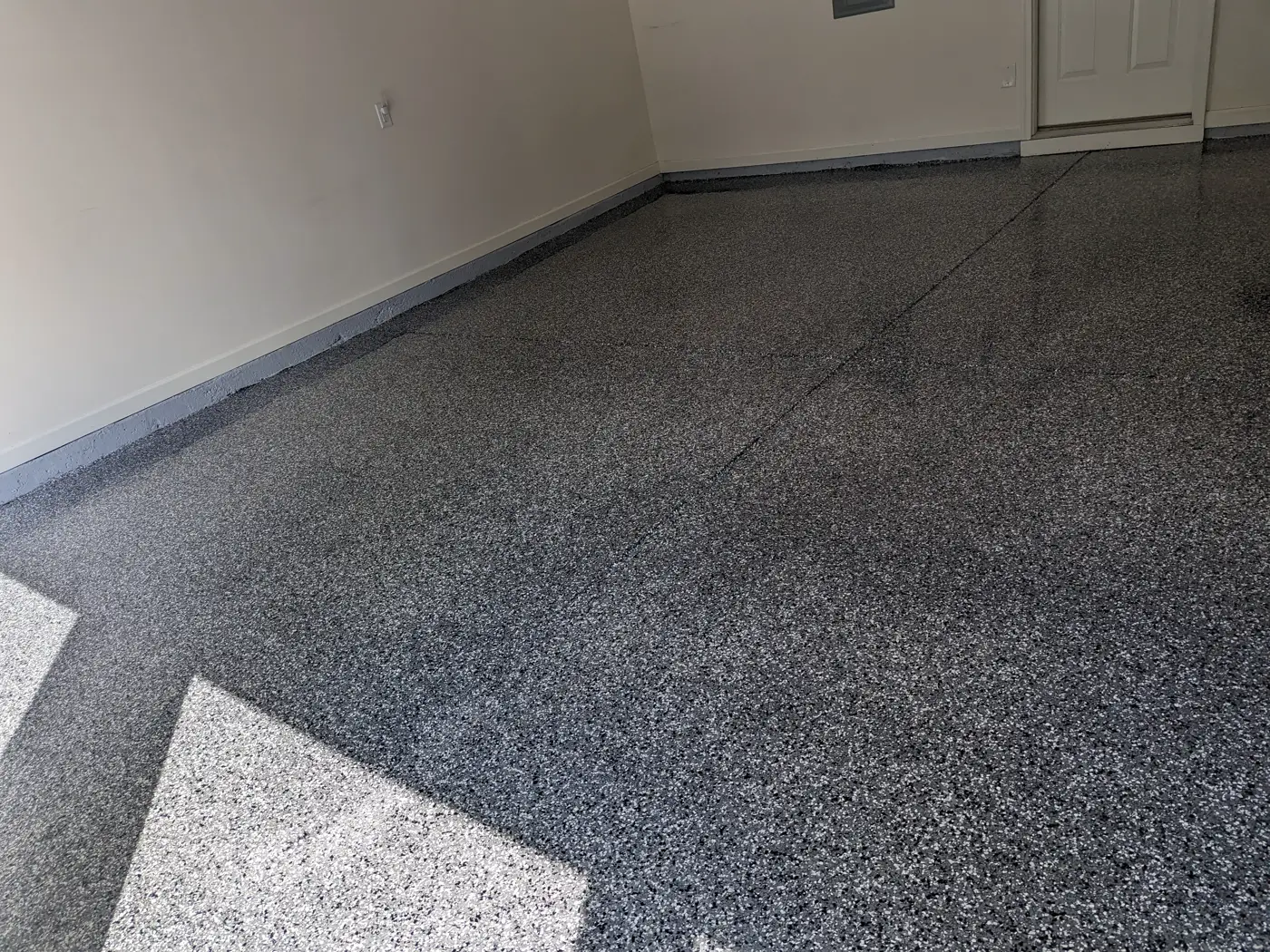
Epoxy garage floor is a phrase people use for the whole job, but a professionally built floor is usually made of layers, and epoxy may fill only some of them. A primer where the concrete calls for one, one or more build coats, decorative media if the finish uses any, and a finish coat at the surface: those are roles, and different products fill them.
That distinction matters as soon as you have two quotes in front of you, because floors described in the same words can be built very differently. The useful question is not which coating is best in the abstract, but what is going onto this slab, in what order, and under which product names.
- Ask for the proposed build written out layer by layer, with the products named.
Substrate
The slab decides more than the coating does
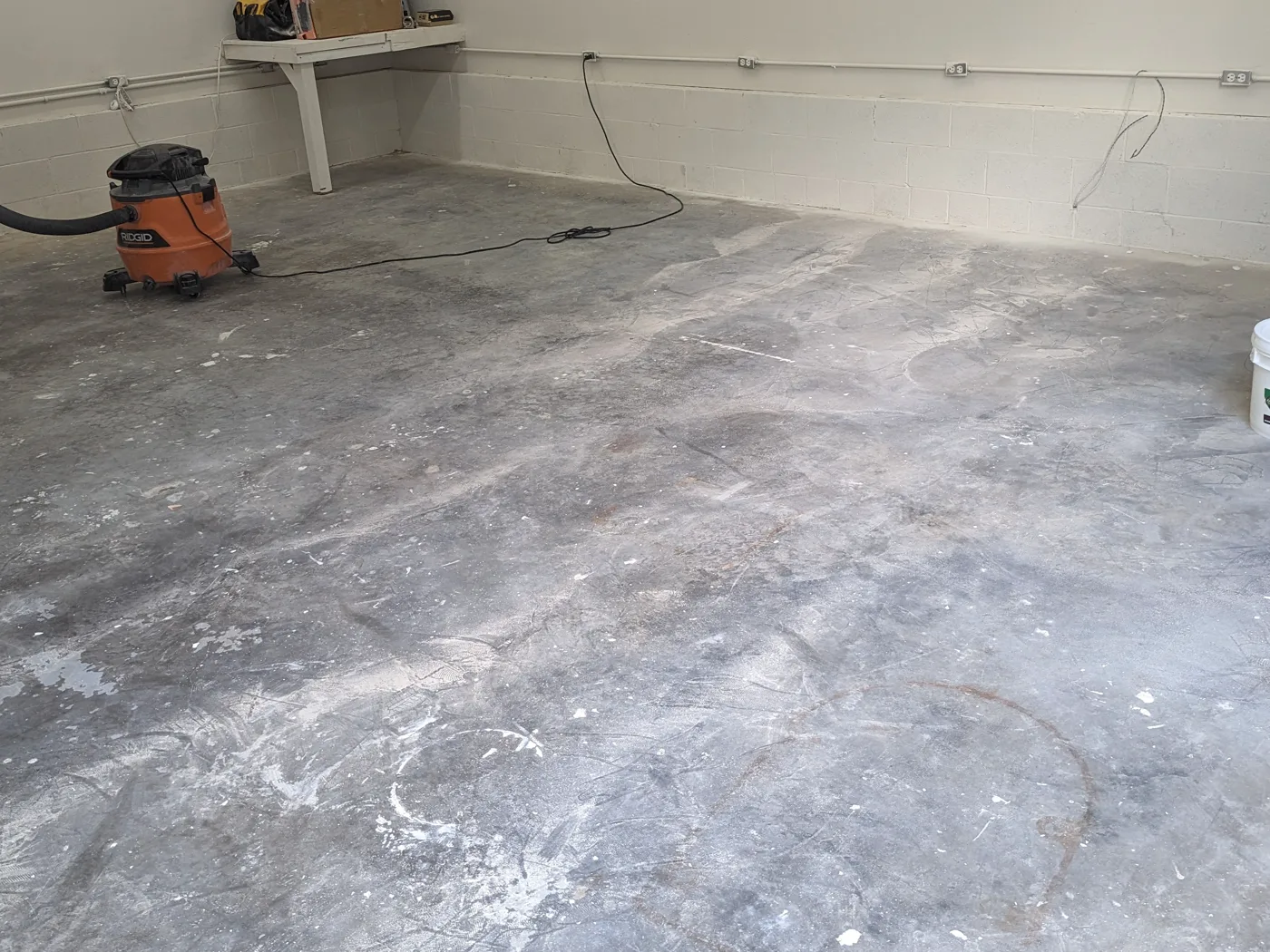
Garage concrete has usually had a harder life than any other slab in the house. Oil and brake dust, road salt carried in over winters, spills nobody cleaned up, paint from an old project and a previous coating somebody rolled on are all ordinary findings, and each one affects what can be installed on top.
Cracks and control joints have to be dealt with rather than covered over. The same goes for spalling, pitting and any area weak enough to come away with the preparation. Moisture is a separate question again: concrete that passes moisture from below can lift a coating that is otherwise sound, and whether that applies to your slab is something a contractor assesses on site rather than from a photograph.
None of this is fully known until preparation starts. That is the honest reason a garage floor quote should say what happens if the concrete turns out not to be what it looked like.
Preparation
How professional preparation differs from a quick clean and roll
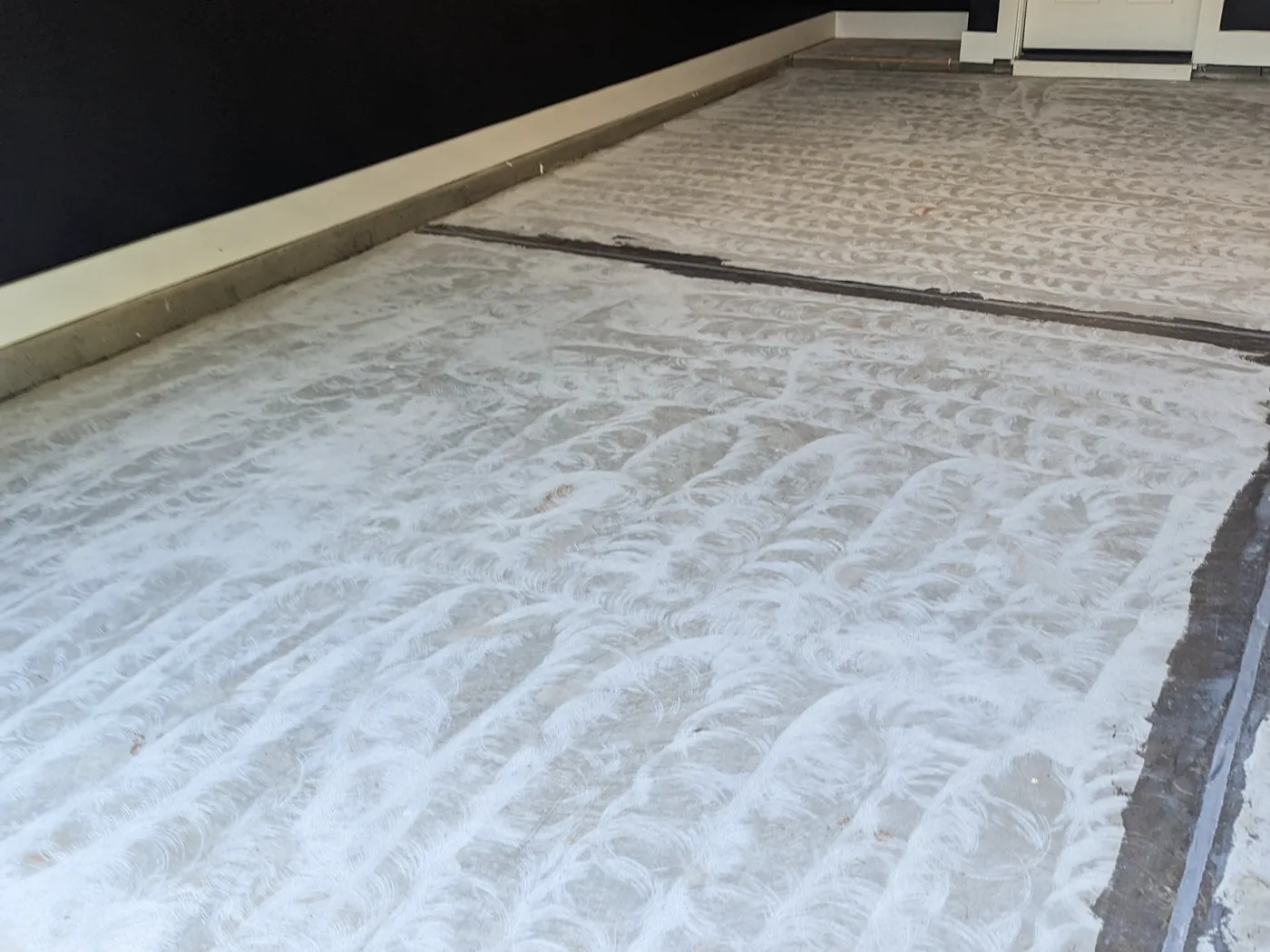
Whether a garage floor coating holds is mostly settled before anything is applied. Professional preparation is mechanical: the surface is opened up by grinding or another mechanical method so the coating bonds to sound concrete rather than to whatever film is sitting on top of it.
Washing and acid etching are the familiar shortcuts, and they are not the same job. They can clean a surface without opening it, and they leave old coatings, sealers and absorbed contamination in place. Which mechanical method suits a given slab, and how aggressive it needs to be, depends on what is on the concrete and what is going over it, so it belongs to the contractor and the product data rather than to a rule of thumb.
Preparation is also the moment the real condition of the slab appears, which makes it the point where scope most often changes.
Appearance
Choosing how the garage floor will look
Most garage floors end up in one of three visual directions: a broadcast flake surface, a metallic pour, or a smooth solid color. They are all built as layered systems, and the decorative part is one layer inside the build rather than the whole of it. A solid color is the plainest of the three and the one that shows the most, which is why it turns up more often in workshops and utility spaces than in garages that double as a room.
They do not behave the same way in a garage. Texture, how much a surface shows dust and marks, how easily it cleans and how it reads in daylight all move with the choice, so it is worth deciding what you want the floor to hide as well as what you want it to look like.
Flake
Flake in a garage
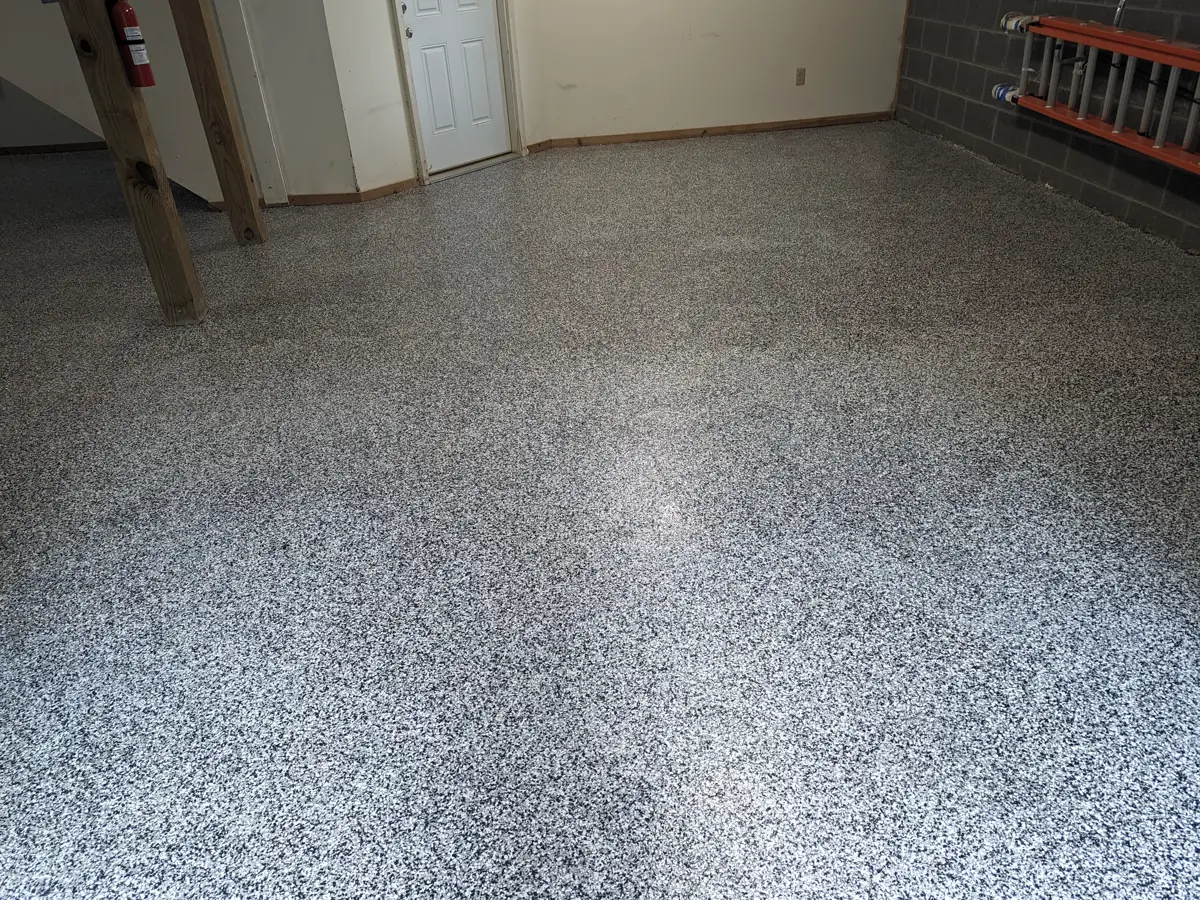
Flake is the usual answer for a garage, largely for practical reasons. A blend of colors breaks the surface up, so tire marks, dust, road grit and the occasional drip are far less obvious than they would be on a plain floor. It also gives the surface a visible grain and, depending on how the floor is finished, something you can feel underfoot.
How it turns out depends on the blend, the color of the coat underneath, how heavily the media is broadcast and how many finish coats go over the top. Two garages described as flake can look nothing alike, so it is worth seeing the proposed blend in your own space and light rather than deciding from a photograph.
Metallic
Metallic in a garage
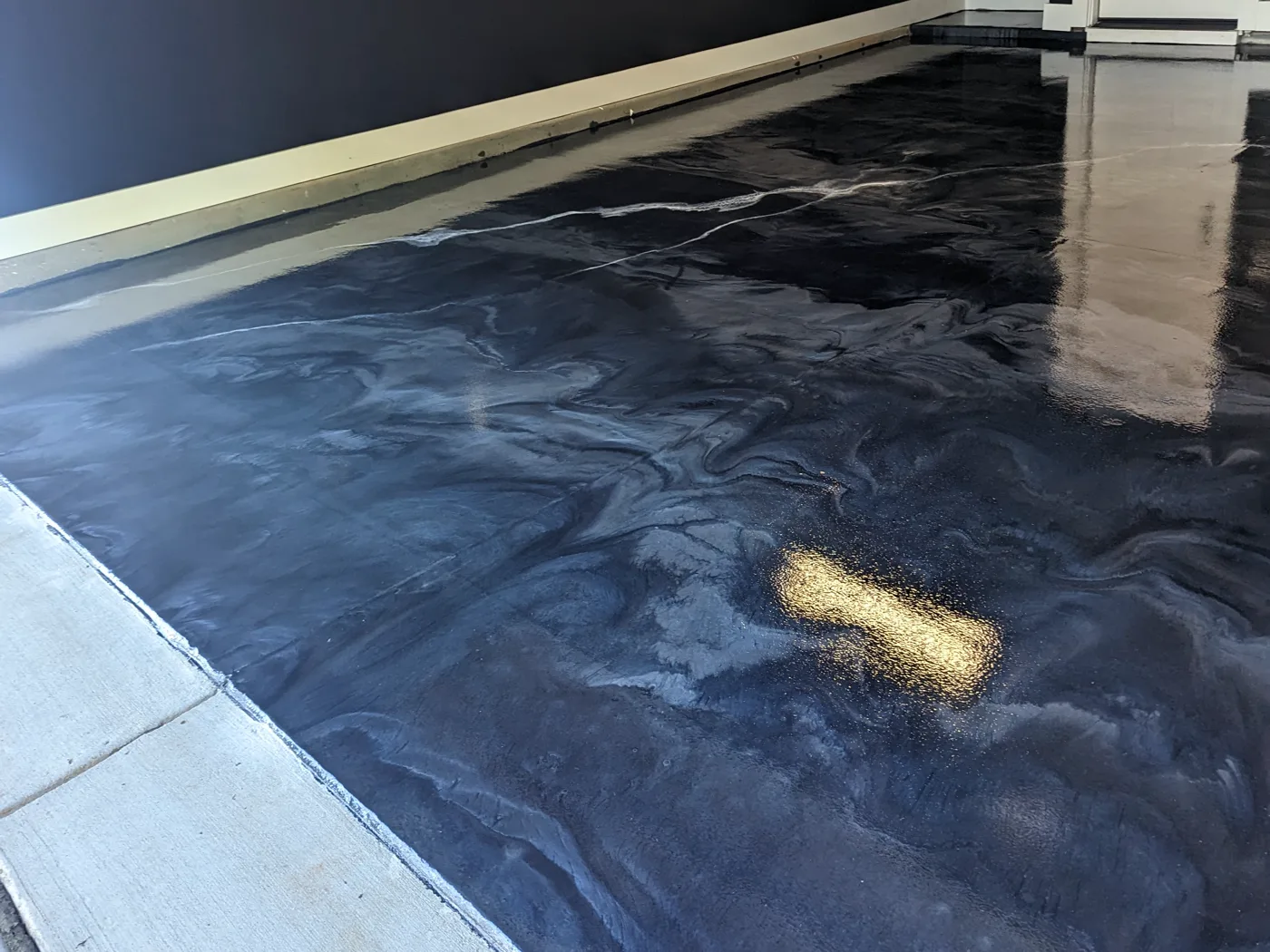
A metallic floor takes its look from pigment moved through a resin coat while that coat is still liquid. The pattern forms once, sets as it cures and is sealed under the finish above it, which is why no two are alike. In a garage it can look striking, and it is what people tend to ask for when the space is treated as a room rather than a parking spot.
It is worth going in with clear eyes. Metallic is a smooth surface and usually a glossy one, and smooth glossy floors show dust, scuffing and marks sooner than a textured flake surface does. Where a garage is a working space, gets wet, or takes a car in and out every day, that is a maintenance question worth raising before the finish is chosen. Whether it suits your garage depends on how you use it and on the products proposed.
Chemistry
Epoxy, polyaspartic and the coats above them
A garage floor system does not have to be one chemistry from the slab up. Epoxy is common in primers and build coats. Polyaspartic and polyurethane products are common at the surface, where the floor gets walked on, cleaned and exposed to daylight through an open door. Plenty of garage systems use more than one, and that is normal rather than a compromise.
There is no best garage floor coating in the abstract. Which combination suits your floor comes from the manufacturer's published data and the conditions on your site, not from a general ranking of chemistries. What is worth asking is what each layer is and why it was chosen for this garage.
Failure
Why garage floors fail
When a garage floor lets go, the color is rarely the culprit. The common causes sit underneath the finish: preparation that never opened the surface properly, contamination left in the concrete, moisture moving up through the slab, or a system that was not matched to what the floor has to do.
Because the damage shows at the surface, it reads as a coating problem. It is usually a bond problem, which is why the questions that protect you are about preparation, slab condition and system fit rather than about brand names.
Traffic
Hot tires, turning loads and parked cars
Garage traffic is not foot traffic. A vehicle concentrates its weight through four small contact patches, and turning the wheels while it is standing still drags that load sideways across one spot. Tires also come home warm and then sit on the floor while they cool.
Warm tires against a coating is the classic garage stress case, and where a system is not up to it the surface can lift with the tire. No coating should be described as immune to that, and how a given system behaves comes from the products and the preparation underneath rather than from a category name. The practical move is to describe how the garage is really used and let the contractor design around it.
- Say whether a daily driver, a project car, motorcycles or a trailer live in there.
- Mention floor jacks, stands, casters and anything heavy that gets dragged.
Scope
What changes the scope of a garage floor project
Two garages of the same size can be very different jobs. Removing an existing coating or old adhesive adds work before the new floor even starts, and so does poor slab condition: cracks and joints that need treating, spalled areas that need rebuilding, and contamination that has to be dealt with rather than sealed in.
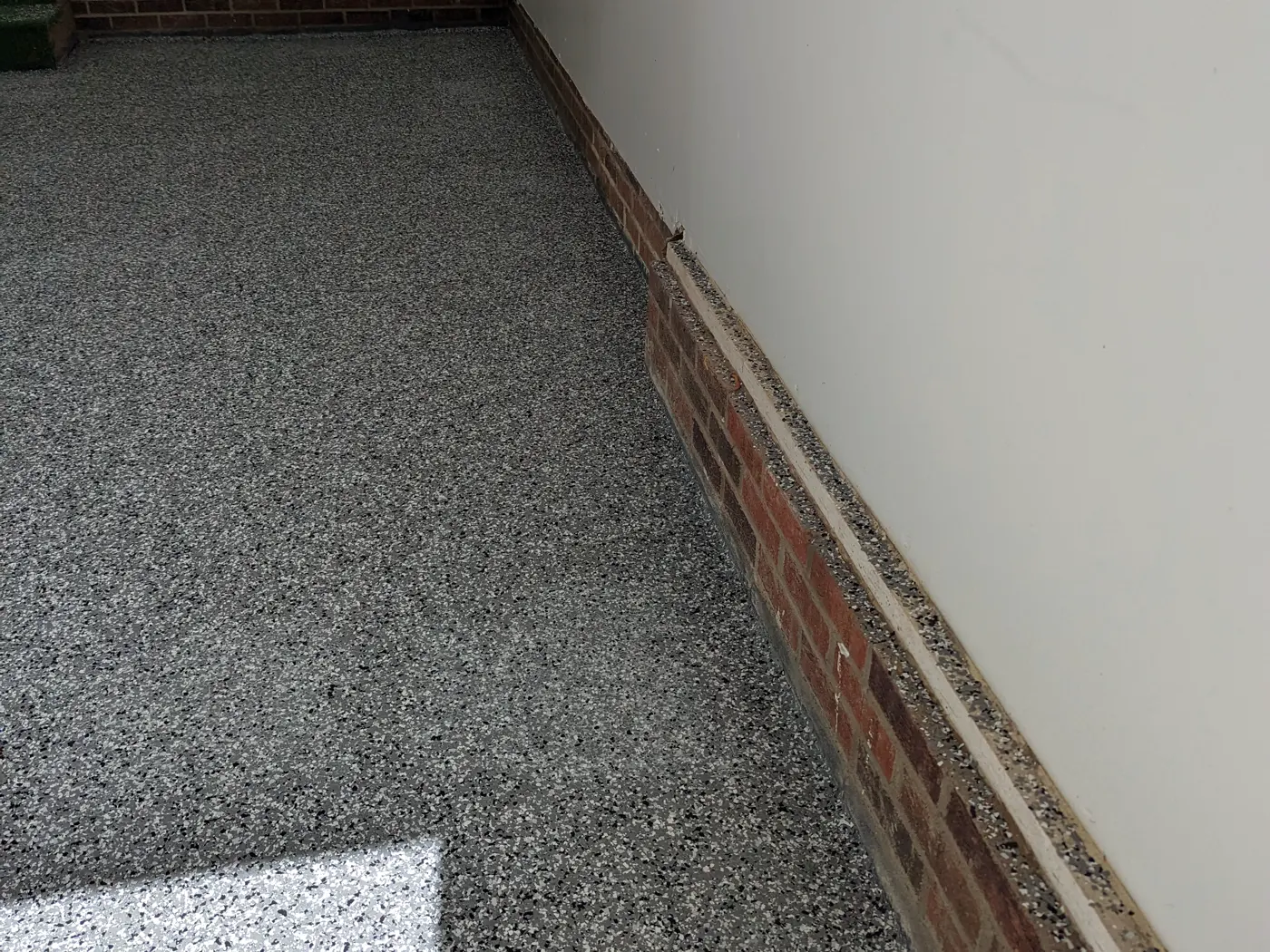
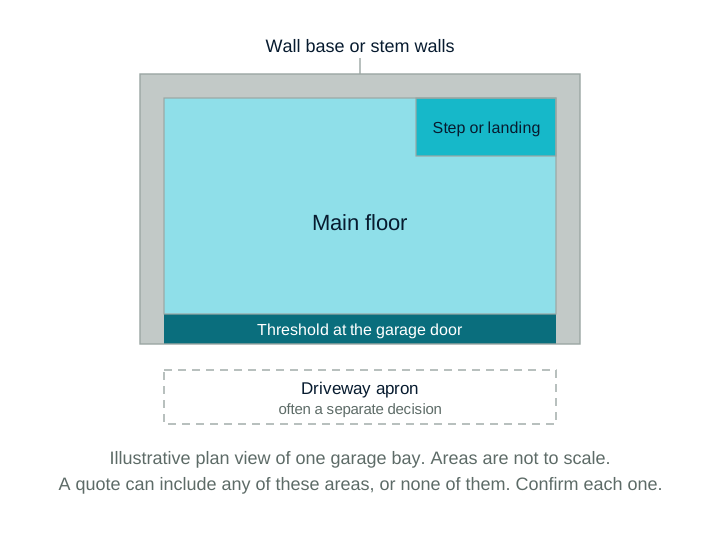
Then there is what the floor actually includes. A garage is rarely one flat rectangle. There are steps and landings at the house door, stem walls or wall bases along the edges, a threshold at the garage door and sometimes an apron outside it. Each is a separate decision, and each takes detail work out of proportion to its area. Access, how much stored gear has to be worked around, and the finish itself all move the number as well.
We do not publish prices here, because a figure without a slab behind it is not much use to anyone. The cost guide walks through what a price is buying and why two quotes for the same garage can land a long way apart.
Schedule
How long the garage is out of use
The crew leaving and the floor being ready are two different moments. A new garage floor takes foot traffic before it will take a parked car, and how long each stage lasts comes from the products installed and the conditions during the work, including temperature and humidity.
That is why no honest figure belongs on a page like this one. Ask for the return-to-service schedule for the products going onto your floor, get it in writing, and decide in advance where the cars are going in the meantime.
The work
What happens during installation
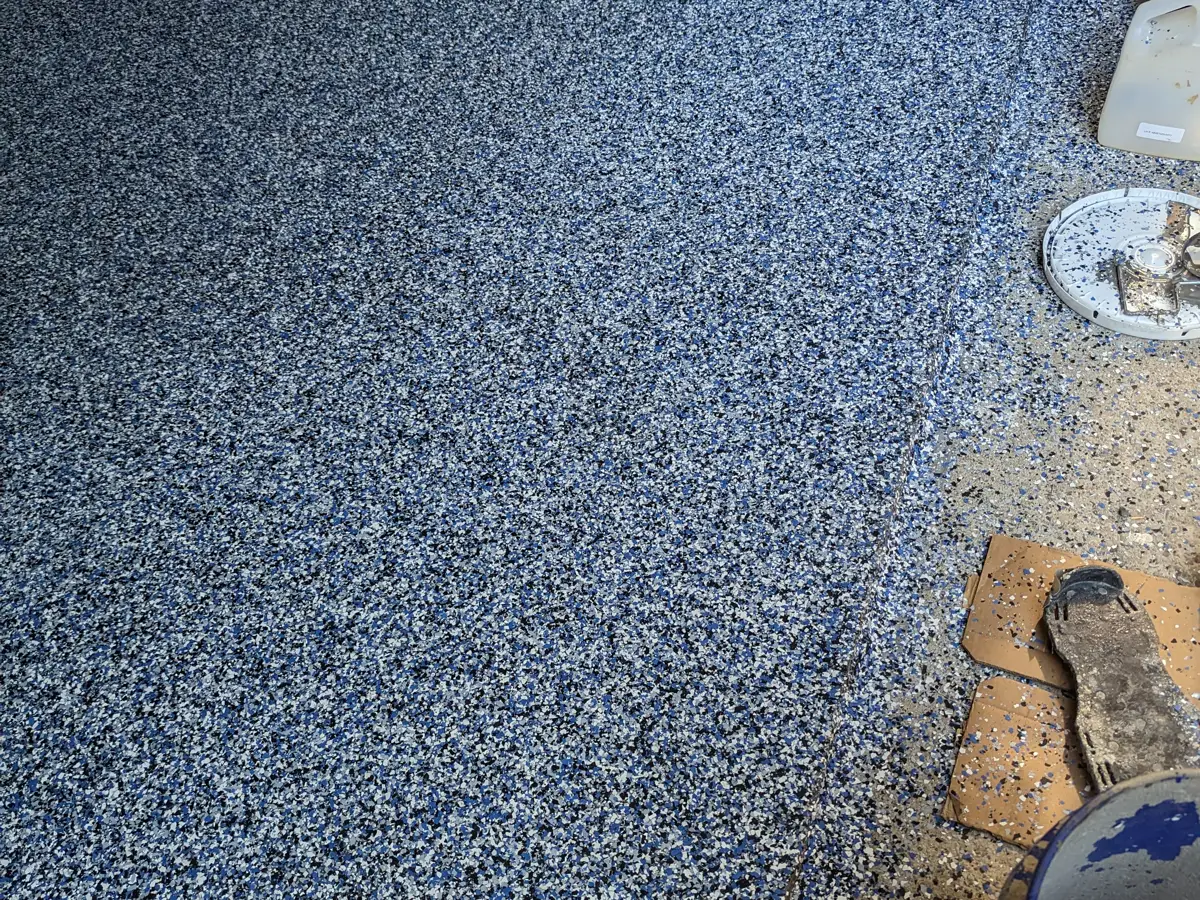
The sequence is broadly consistent even though the products are not. The garage is cleared and masked; the slab is prepared mechanically; repairs are made to cracks, joints and damaged areas; the system goes down coat by coat; decorative media is broadcast into a wet coat where the finish uses any, and the loose material is taken back off once that coat has cured; then the finish coats go on and the floor is left to reach the stages where it can be used again.
The parts that decide the outcome are the ones that photograph least well: how thoroughly the slab was prepared, and whether each coat went on inside the window the product allows.
Comparison
Kits, DIY and a professionally built floor
Plenty of people coat their own garage, and some of those floors do perfectly well. The comparison worth making is not brand against brand, though. It is one complete system against another, including what happened to the concrete before either went down.
A store-bought kit and a professionally installed floor usually differ in how the slab is prepared, how much material ends up on the floor, how long the applicator has before a coat stops accepting media, what goes on at the surface, and what happens if part of it fails a year later. Those are the things to line up side by side.
So if you are weighing a kit against a quote, compare the preparation and the full layer build rather than the price and the color of the chips.
Checklist
How to compare two garage floor quotes
Quotes get much easier to compare once they answer the same questions. These are the ones worth putting to both.
- The products proposed, named, and the order the layers go down in.
- How the concrete will be prepared, and by which method.
- How cracks, joints, spalling and any contamination will be handled.
- The finish: the flake blend, metallic or solid color, and the coat underneath it.
- The finish coat proposed, and the sheen and texture to expect from it.
- Which areas are included: floor, steps, stem walls, thresholds and any apron.
- The return-to-service schedule for the products going onto your floor.
- What could change the scope once preparation has started, and how that gets priced.
- What the contractor warrants, for how long, and what would void it.
Next step
What happens after you request an introduction
Epoxy Pro Leads is an independent education and contractor-introduction resource. We are not the installer, we do not employ crews, and we do not price, specify or inspect your floor.
When you send a request we read the details, and where it is a fit we pass it to one contractor who works in your area and takes on that kind of project.
- Useful details: the size of the garage, how it is used, the condition of the slab, the finish you have in mind, and your timing.