
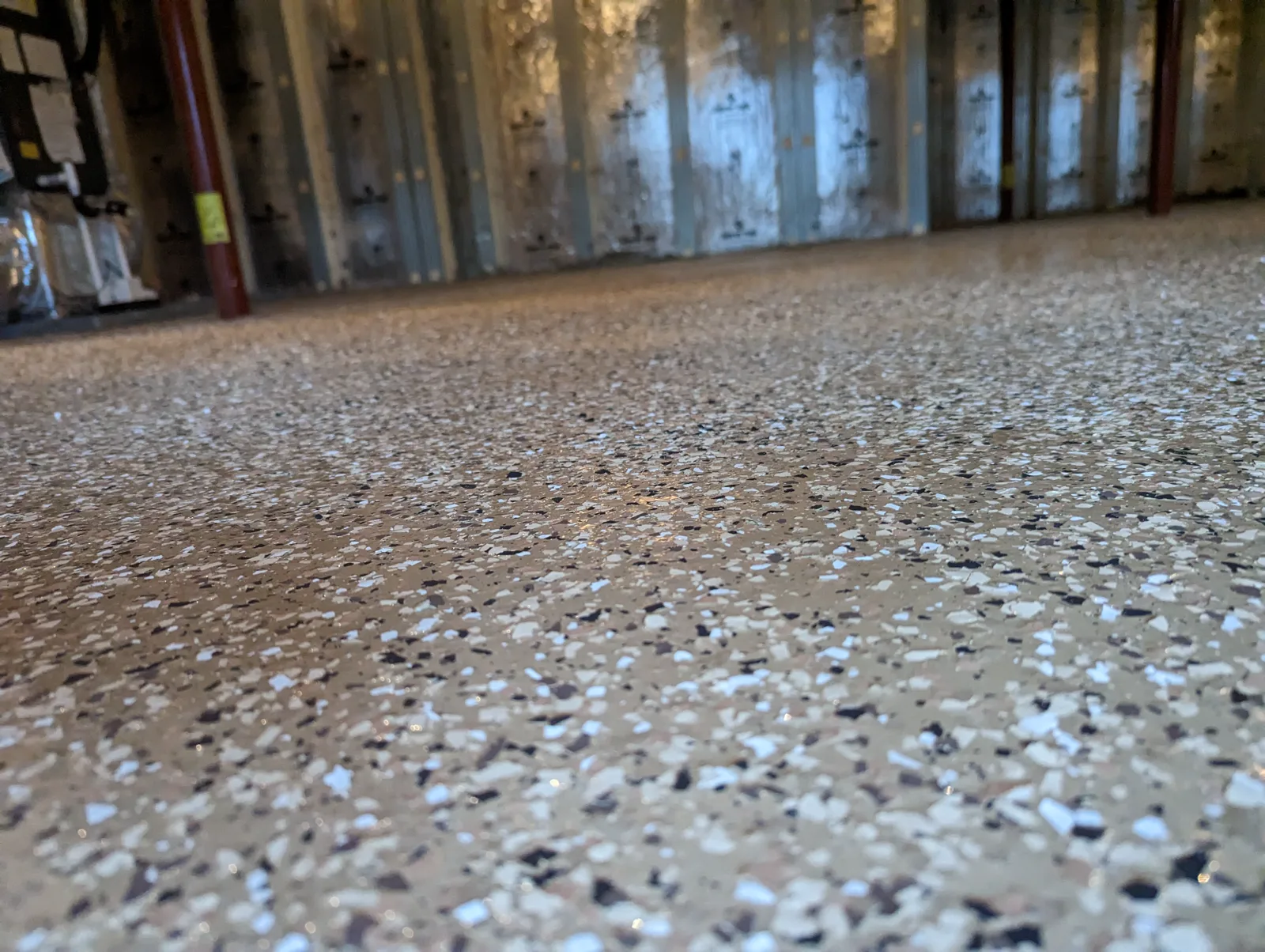
Polyaspartic systems
Polyaspartic flooring and where it fits in a coating system
Polyaspartic flooring is usually discussed as though it were a kind of floor. On a professionally installed system it is more often a material doing a particular job inside a build: sometimes a base, more often the coat at the surface, and frequently alongside another chemistry rather than instead of it.
This page covers where polyaspartic fits, what it genuinely changes about a project, and where it is not automatically the right answer. Epoxy Pro Leads is an independent education and contractor-introduction resource; we do not install floors, and the system for your slab is the contractor's decision, made with the products they carry.
Polyaspartic usually names a material in the build, not the whole floor.
The slab still decides more about the result than the chemistry does.
Performance belongs to named products, not to a category.
The idea
What polyaspartic flooring actually means
Polyaspartic is a resin chemistry rather than a floor type. When a proposal says polyaspartic flooring, or quotes a polyaspartic coating, it usually means one or more layers of the system are polyaspartic products, and the rest of the build is whatever the contractor and the manufacturer specify around them.
That distinction matters, because a floor is assembled in layers with different jobs: something to bond to the concrete, something to build thickness, decorative media where the finish uses any, and a coat at the surface that takes the traffic. A polyaspartic can fill more than one of those roles, and it does not have to fill all of them.
So the useful question is never only whether a floor is polyaspartic. It is which layers are, which products they are, and why those were chosen for this slab.
The system
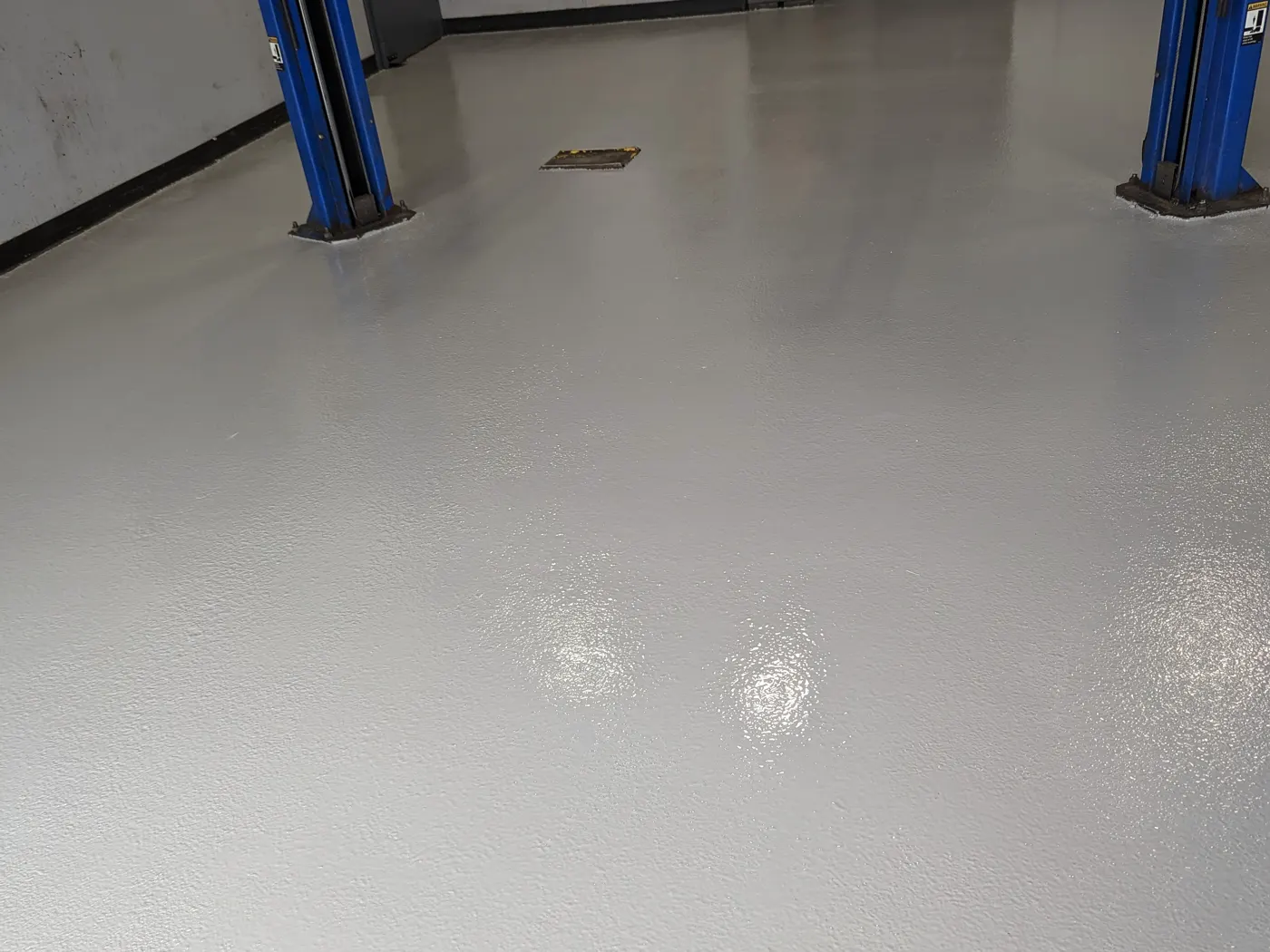
Polyaspartic is one decision inside a system
A finished floor is a stack of decisions, and chemistry is only one of them. Prepared concrete comes first, repairs go in where the slab needs them, and then the build: a primer where the substrate calls for one, one or more build coats, decorative media if the look requires it, and a finish coat at the top.
Each of those roles asks for something different. A primer has to bond and penetrate. A build coat has to go on evenly and level out. A finish coat has to survive traffic, cleaning and whatever daylight reaches it. Nothing requires one chemistry to fill all of them, and plenty of well-built floors do not.
Substrate
Preparation still decides the foundation
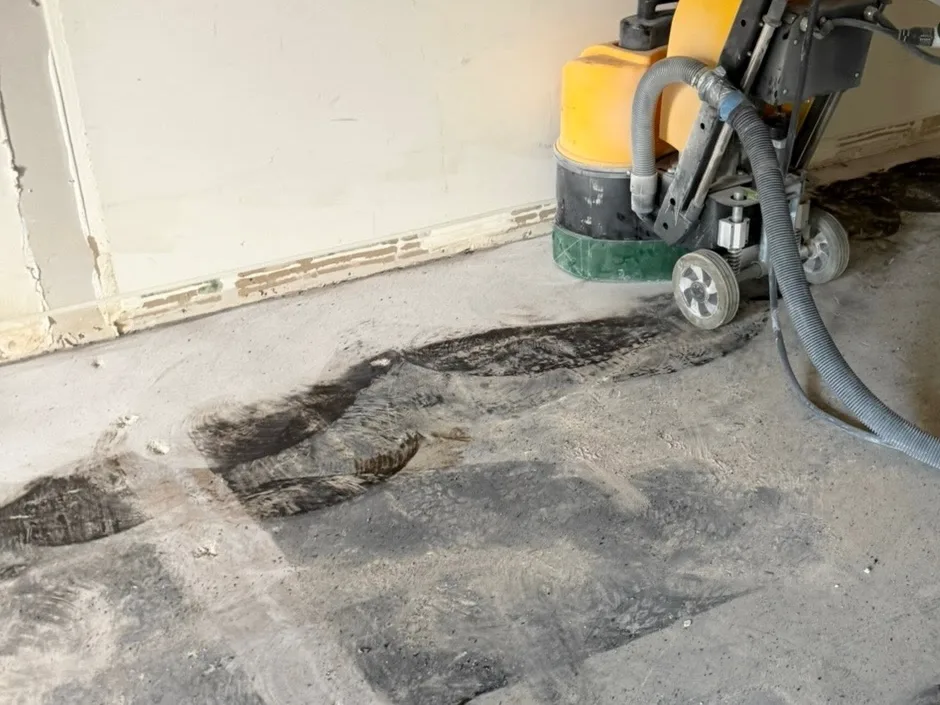
Nothing above the slab compensates for what is under it. A fast-curing product bonds to whatever it is put on, so contamination, an old coating, a sealer or weak surface concrete limits the result exactly as it would under any other chemistry.
Preparation is where existing material comes off, where cracks and joints get dealt with, and where the concrete's real condition finally shows. Mechanical preparation opens the surface so the coating has sound concrete to grip; washing and etching do not do the same job. Which method suits a given slab depends on what is on it and what is going over it, which makes it the contractor's call rather than a rule of thumb.
Where it fits
Where polyaspartic is commonly considered
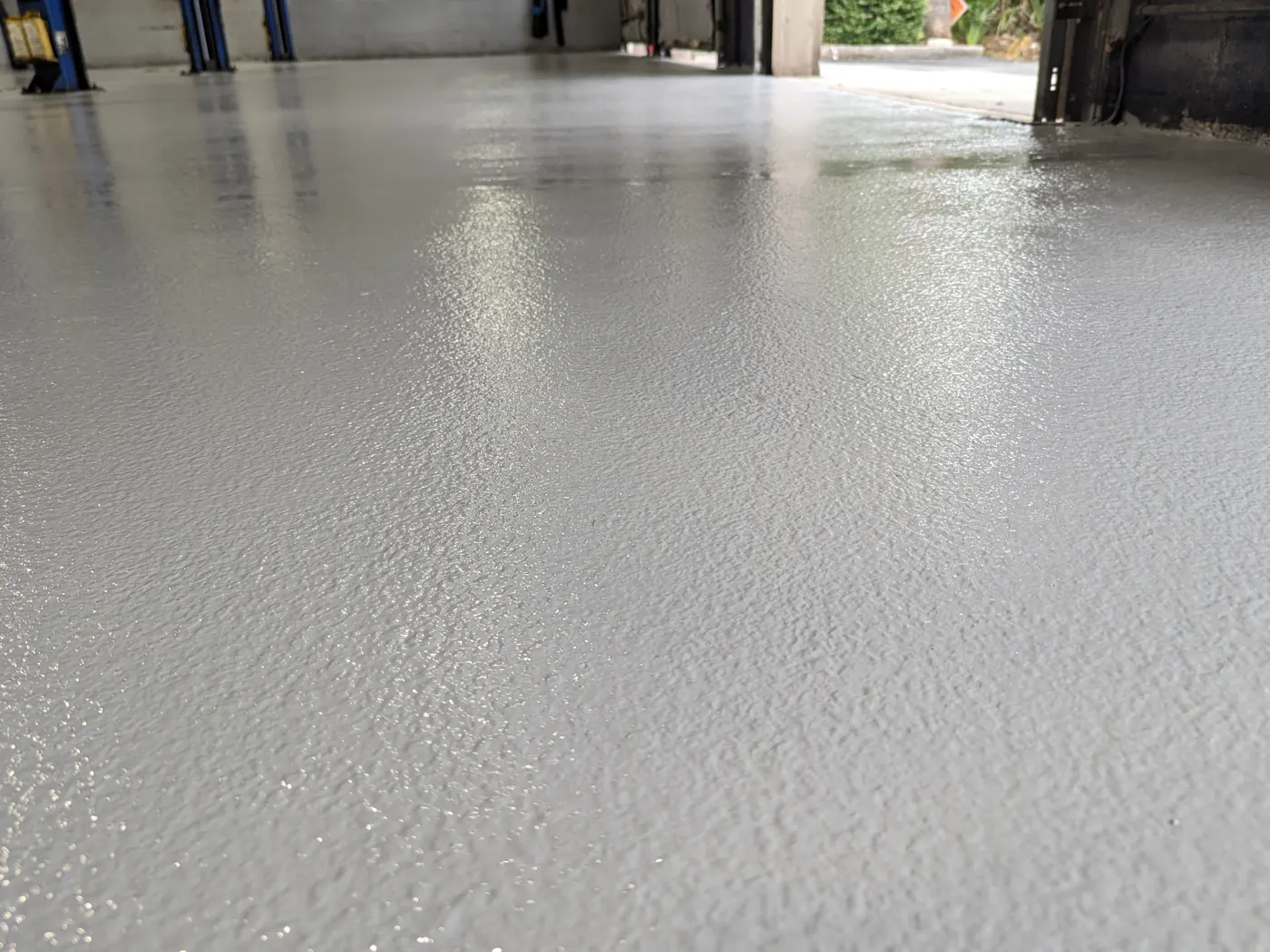
A polyaspartic floor coating comes up most often where schedule, daylight or a decorative finish is part of the brief.
A polyaspartic garage floor usually means getting the cars back in sooner, and living with sunlight through an open door. In a workshop, a service bay or a working commercial space it more often means closing an area for less time, because the closure is the expensive part. In a decorative build it frequently means a clear coat over broadcast media.
None of those are guarantees. They are the reasons the material tends to be proposed, and each of them still has to be checked against the products actually specified.
Comparison
Epoxy and polyaspartic are not simply competitors
Asked to choose between epoxy and polyaspartic, most people expect one of them to win. On a professionally installed floor both are often involved, doing different jobs, and an epoxy primer or build coat under a polyaspartic finish is an ordinary specification rather than a compromise.
Where they genuinely differ is in how they behave during the work and at the surface, and that is a product-level question rather than a category-level one. The full comparison, role by role, is its own guide.
The surface
Polyaspartic, polyurethane and the coat you walk on
The coat at the surface is the one you actually walk on, clean and expose to light, so which product fills that role matters more than the name given to the system as a whole.
Polyaspartic and polyurethane products both appear there. They differ in how they are applied, how quickly they cure and how they are formulated for particular exposures, and those differences belong to specific products rather than to the family name.
Schedule
Return to service and project scheduling
Faster cure is the most common reason polyaspartic gets proposed, and it is worth being precise about what that buys. The time a crew has to work with a product and the time before you can use the floor are two different things, and both come from the products installed and the conditions during the work.
For a household that is when the cars come back in. For a business it is how long an area stays closed, which is often the costly part of a floor. Ask for the return-to-service schedule for the products going onto your floor, in writing. A figure published as a general rule is not about your floor.
Daylight
UV exposure and color stability
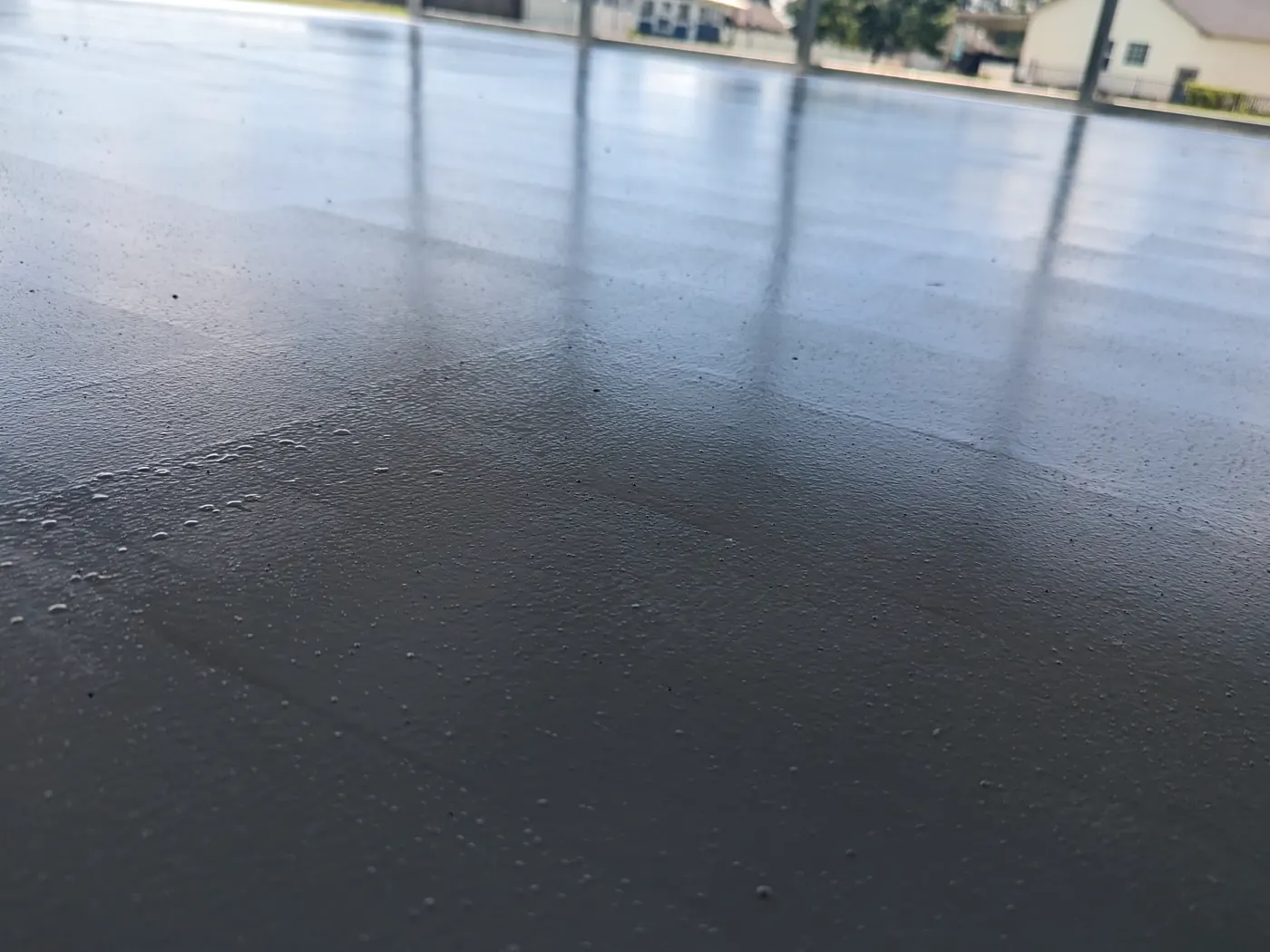
Where daylight reaches a floor, color stability becomes part of the specification rather than a detail. Many polyaspartic products are selected for exactly that reason, and it is one of the more common arguments for using one at the surface.
It is worth being accurate about the comparison, though. Aliphatic polyurethanes can also be light-stable, and both families include products formulated for exterior exposure and products that are not. The old shorthand that polyurethane yellows is not a safe generalization, and no product should be described as immune to every change in appearance.
The question that actually helps is narrower: is the specific product proposed approved for the exposure your floor gets, and what does its manufacturer say about color stability?
Decorative
Flake systems and coating chemistry are separate decisions
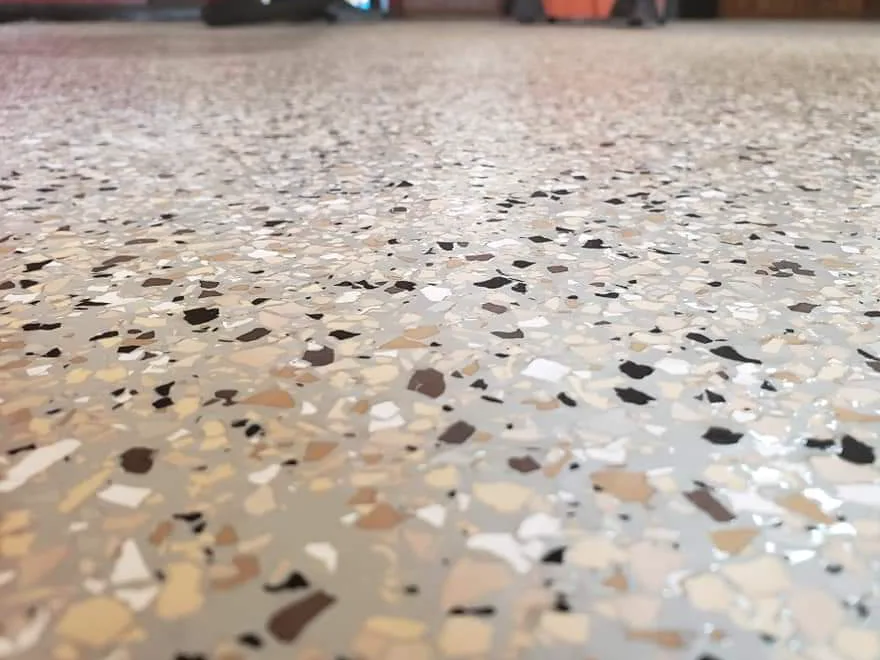
Decorative flake and coating chemistry get discussed as one thing, and they are not. The flake is media broadcast into a wet coat. The chemistry is what that coat, and the coats above it, are made of. The same blend can sit under different finish products, and the same finish product can go over different blends.
So a floor described as a polyaspartic flake system is really two choices: the look, and what is protecting it. Both are worth asking about separately, because they can be changed independently.
Surface
Texture, gloss and traction
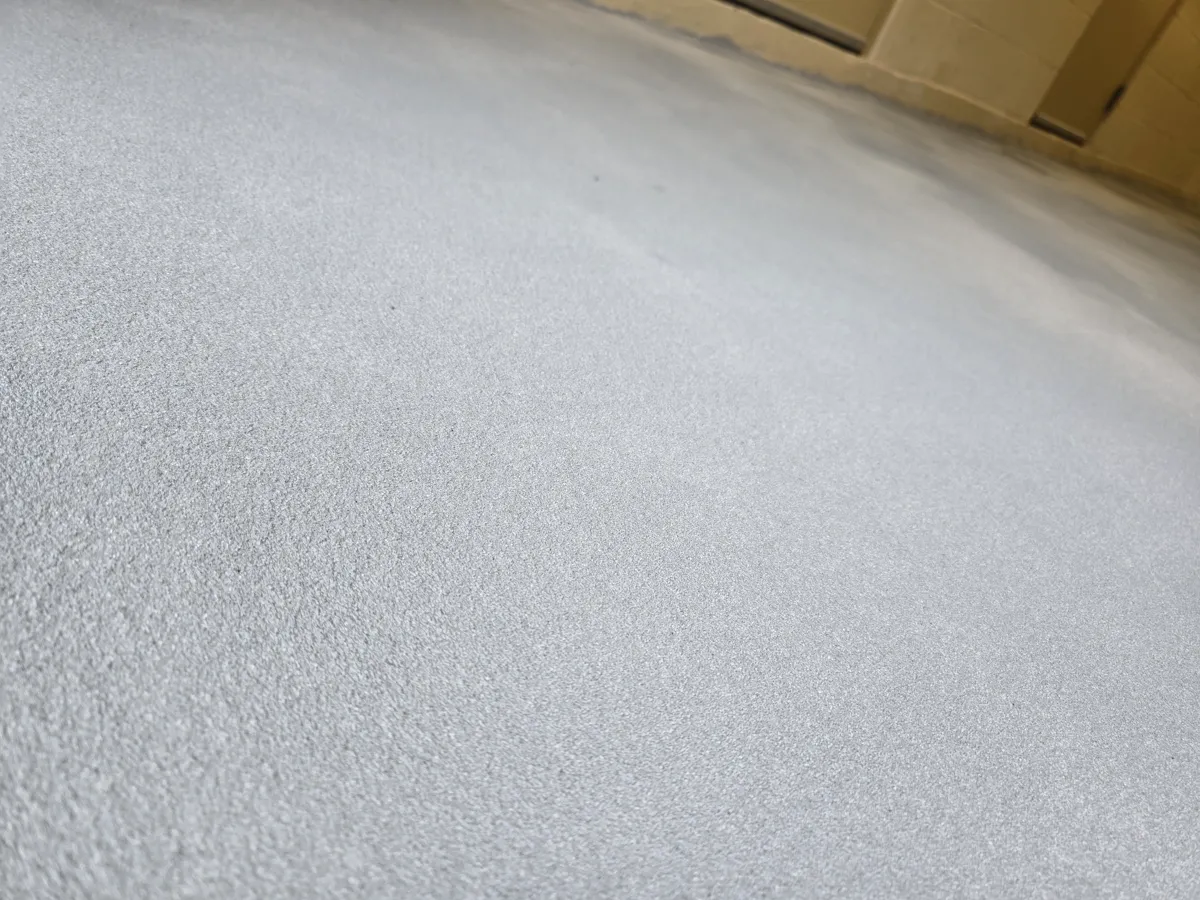
Gloss, texture and grip come from the complete finish specification rather than from the chemistry name. A finish can be applied smooth, or with an additive broadcast into it, and the same product can produce quite different surfaces depending on how it is finished.
Those choices pull against each other. A smooth, high-gloss floor reflects light and reads as clean, and it also shows dust and scuffing sooner. A textured surface hides more, and holds on to more of what lands on it. Slip performance depends on the finish, any additive used, the cleaning routine, footwear and what gets spilled, so it belongs in the specification for your floor rather than in a claim about the material.
- Agree the sheen and the texture against how the floor will actually be cleaned.
Fit
Where polyaspartic may not be the automatic answer
Polyaspartic is not the premium answer to every floor, and treating it that way is how projects get specified backwards. It is a material with characteristics, and characteristics are only useful against a particular floor.
Selection should follow the space. What the slab is and what is already on it, what the floor is exposed to, what crosses it, which chemicals are involved, when the area can close, how it should look, how a damaged patch would be dealt with later, and what the budget actually covers all come first. Where those point somewhere else, somewhere else is the right answer.
- Substrate: what the concrete is, and what is already on it.
- Exposure: daylight, water, chemicals and heat, and how often.
- Traffic: what crosses the floor, and how heavy it is.
- Schedule: when the space can close, and for how long.
- Appearance: the look you want, and how much you need it to hide.
- Repair: how a damaged area would be dealt with later.
Scope
What affects the scope of a polyaspartic floor project
Two floors of the same size can be very different jobs, and most of the difference is settled before any coating goes down.
Removing an existing floor adds work before the new one starts, and so does poor slab condition: cracks and joints that need treating, spalled areas that need rebuilding, contamination that has to be dealt with rather than sealed in. After that it is the shape of the space rather than its area. Edges, steps, thresholds, vertical surfaces and coves all take detail work out of proportion to the floor they cover.
Access, how much has to be worked around, the decorative finish, and the schedule you need all move it as well. We do not publish prices here, because a figure without a slab behind it is not much use to anyone.
Checklist
What to compare between proposals
A polyaspartic proposal is far easier to judge when it answers the same questions as the ones sitting beside it.
- How the concrete will be prepared, and by which method.
- Which repairs are included, and what happens if the slab is worse than it looked.
- The products proposed, named, and which layer each one fills.
- The order the layers go down in.
- The decorative broadcast, if the finish uses one, and how heavily it goes on.
- The finish coat proposed, and the sheen and texture to expect from it.
- How texture or traction is being addressed, where the space needs it.
- Which areas are included: floor, edges, steps, thresholds and coves.
- The return-to-service instructions for the products going down.
- What the contractor warrants, for how long, and what would void it.
Next step
What happens after you request an introduction
Epoxy Pro Leads is an independent education and contractor-introduction resource. We are not the installer, we do not employ crews, and we do not price, specify or inspect your floor.
When you send a request we read the details, and where it is a fit we pass it to one contractor who works in your area and takes on that kind of project.
- Useful details: the space, approximate area, slab condition, the finish you have in mind, and your timing.