
Why do epoxy floors peel?
The failure modes that trace back to preparation, in more depth than this page goes into.
Visit pageCommercial and industrial floor coating guidance, with residential garage flooring resources
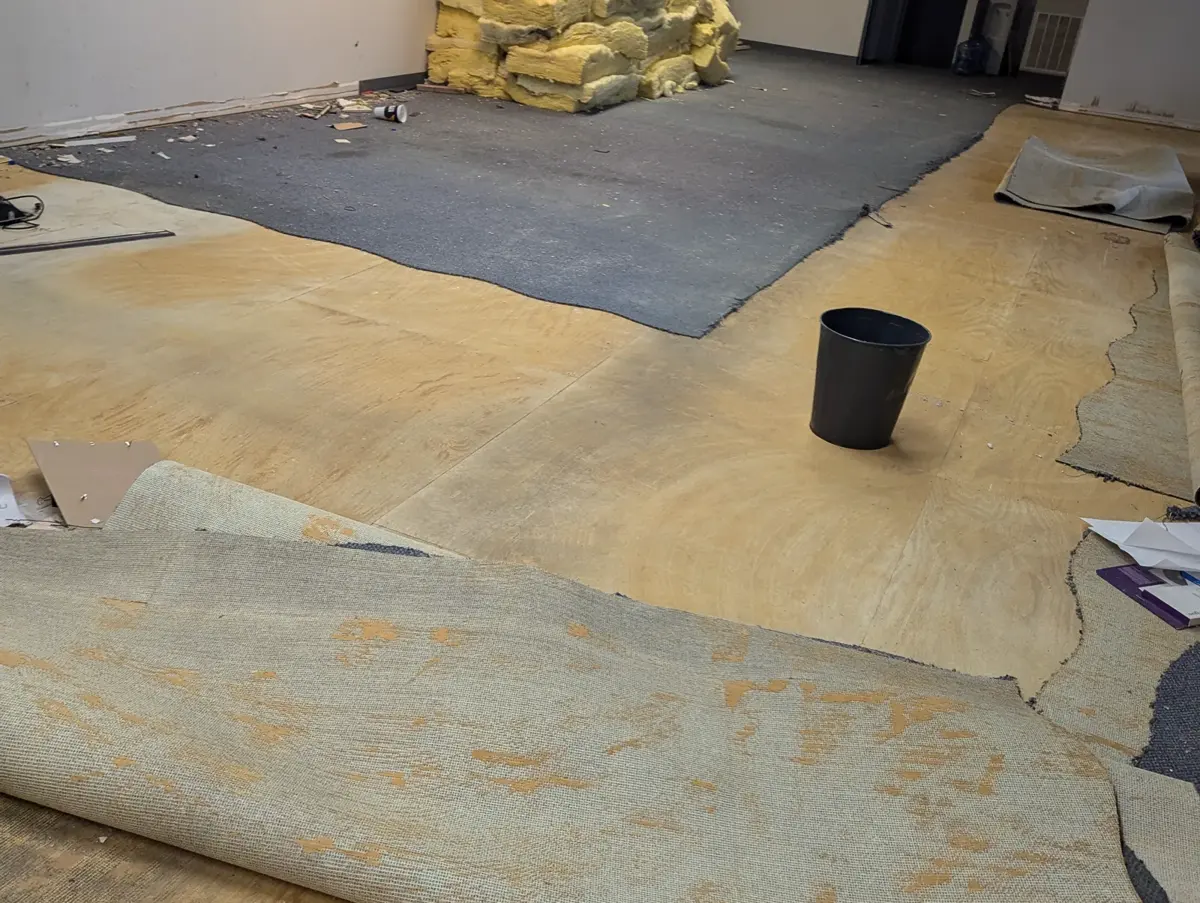
Surface preparation
Most problems people describe with a floor coating trace back to what happened before the first coat went down. Preparation disappears under the finished floor, which is exactly why it is worth understanding before you compare proposals.
Epoxy Pro Leads does not carry out this work. We help owners and facility teams understand it, then connect them with contractors who do.
Preparation requirements come from the slab in front of you and from the system being installed.
What a grinder turns up can change the scope after the work has started.
A proposal should say how the slab will be prepared, not only what will be applied to it.
The purpose
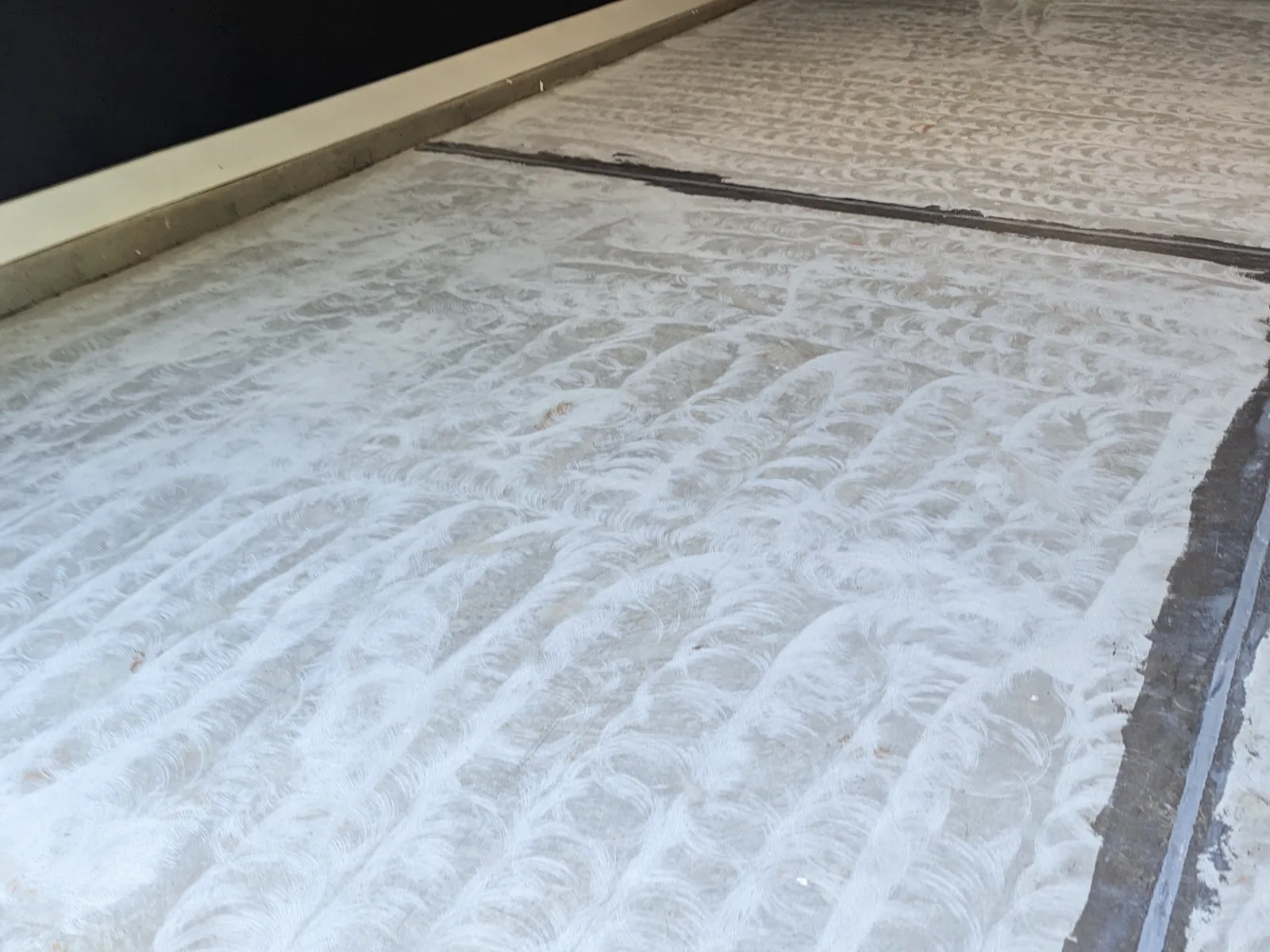
A coating has to hold on to the concrete underneath it, and that bond is made in the top of the slab. That surface tends to decide more about the outcome than the product name on the bucket.
Professional concrete coatings usually need mechanical preparation, such as diamond grinding or shot blasting, to remove weak surface material, expose sound concrete, and leave a profile the coating can key into. Washing, acid etching, or light sanding may not be enough.
Removal
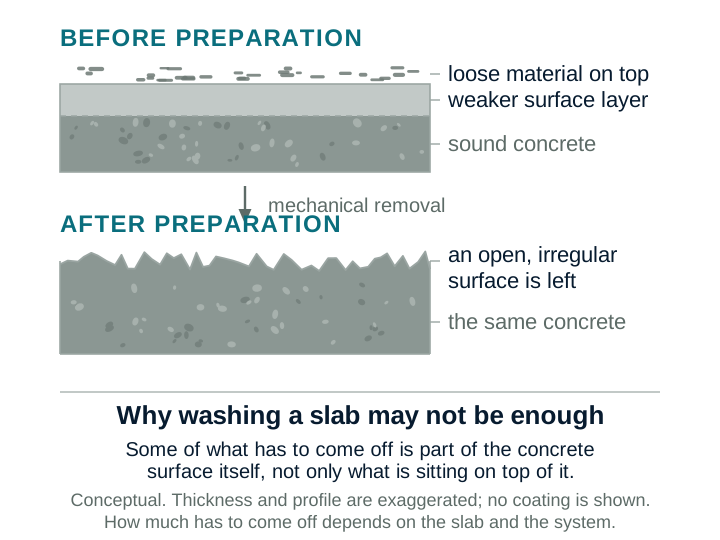
Two different things usually have to come off. The first is whatever sits on the surface: dust, dirt, residue from curing compounds, spills that have soaked in. The second is the surface of the concrete itself, which on many slabs is weaker and more closed than the concrete below it.
Cleaning can deal with the first. The second is why the machines are there.
Discovery
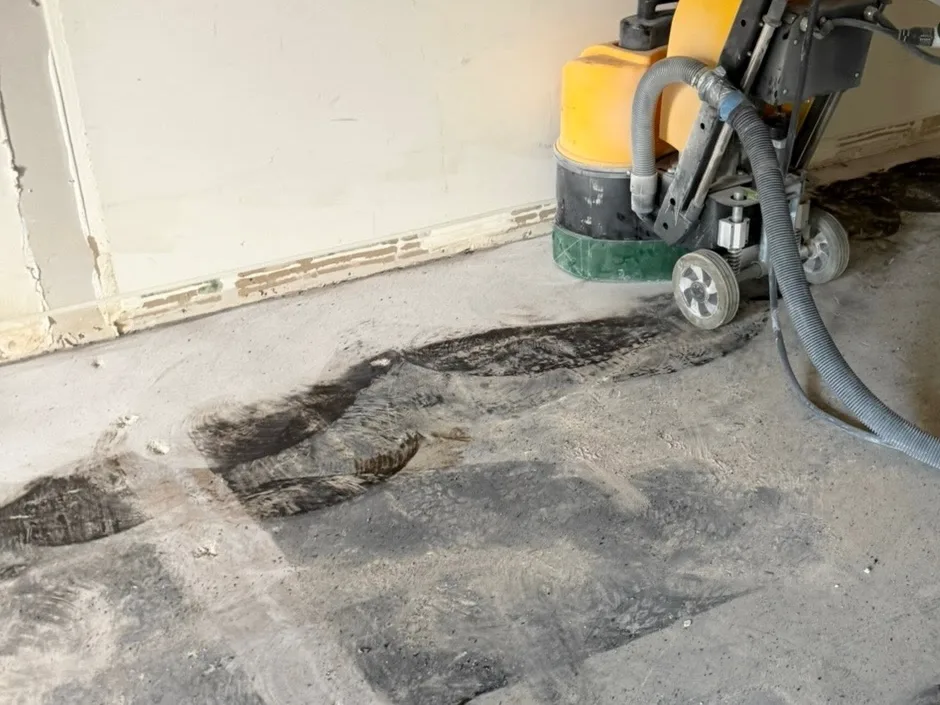
Preparation is also the first proper look at the slab. It can reveal old coatings, adhesive, sealer, oil that has soaked in, soft or damaged concrete, cracks, spalls, joints that need attention, and edge conditions nobody could see through the old floor.
Some of that changes the scope. Poorly bonded old material can carry its weakness into the new floor, so it usually has to come off rather than be covered.
Repairs
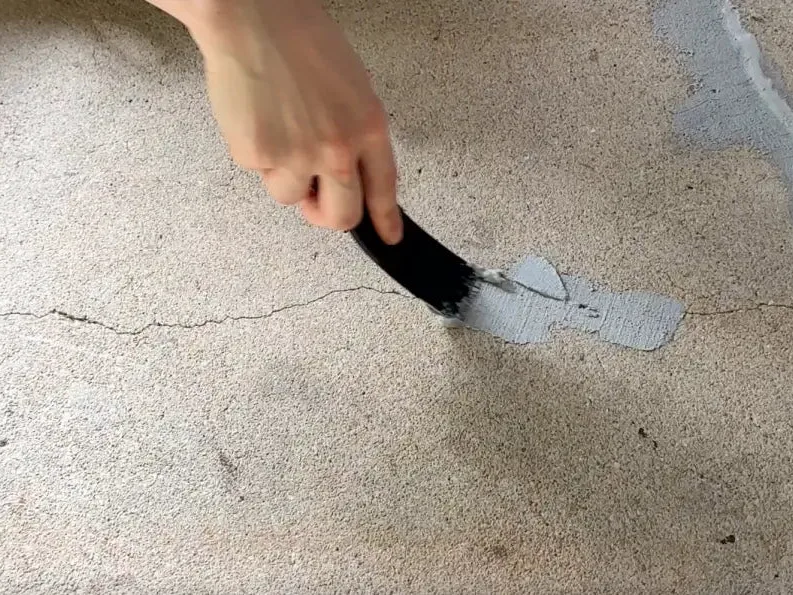
Cracks, spalls, pitting, low spots and broken edges are normally dealt with after preparation and before coating, once the slab is clean enough to show what is there.
Not every crack is treated the same way. A hairline crack in a sound slab, one that is still moving, and one that points to something structural are three different situations with three different answers.
Joints
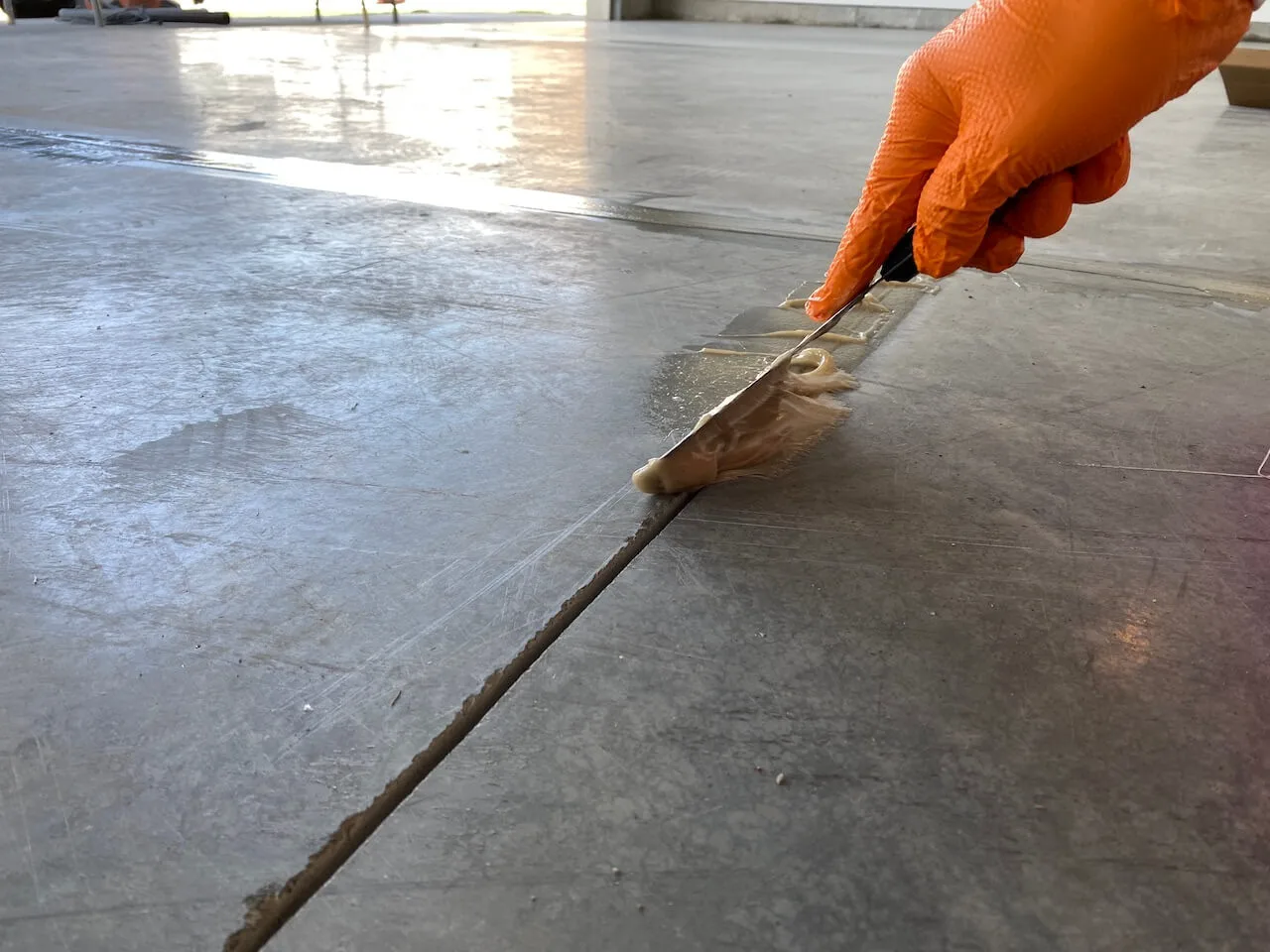
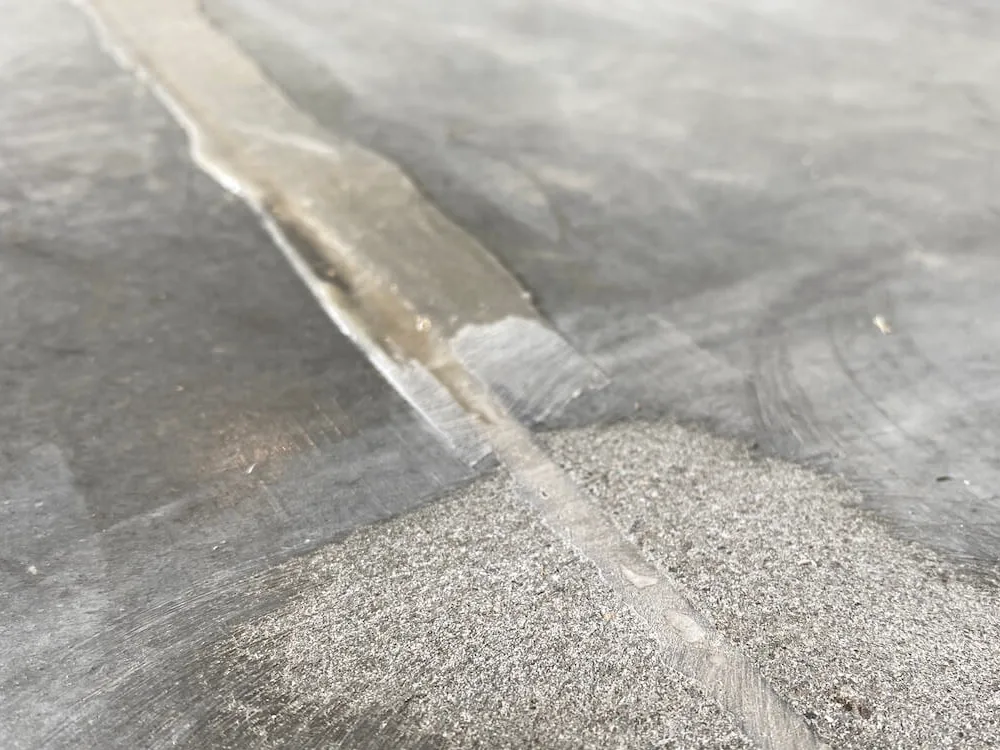
Control joints and construction joints are deliberate. They were put there so the slab could move, or crack along a chosen line rather than at random, which means they cannot all simply be filled and forgotten.
Some are filled level so the coating runs across them. Some are carried through the finished floor so they can keep doing their job. Which applies depends on the slab, the joint and the system.
Detail work
A walk-behind or ride-on grinder prepares the open floor. It cannot reach tight against a wall, into an inside corner, around a column or a drain, or up to the lip at a doorway or garage threshold.
Those areas are prepared separately, usually with smaller hand-held machines, and take time out of proportion to their area. They are also the easiest place to cut a corner, because they are the parts of a floor people look at least.
Planning
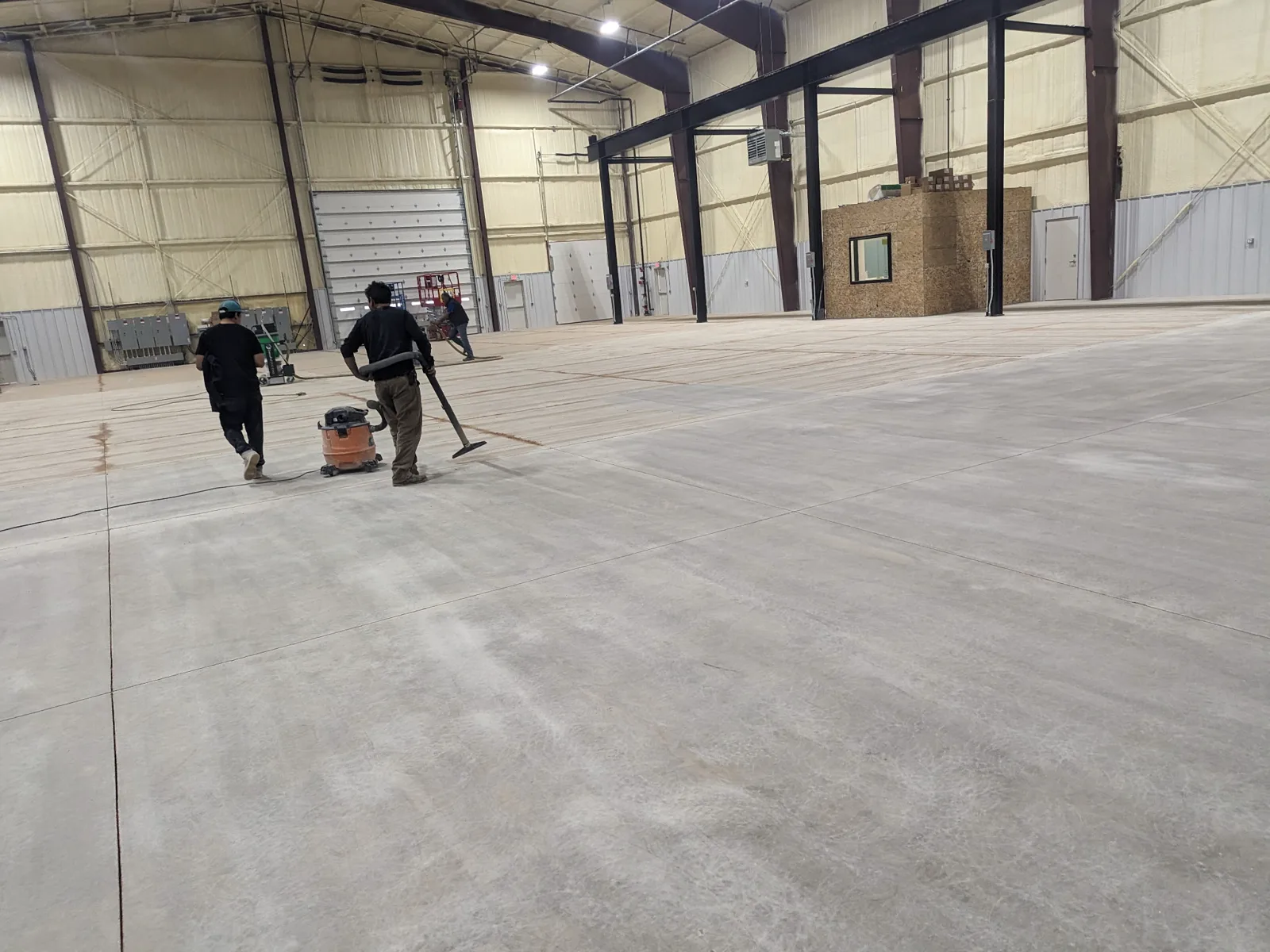
Grinding concrete makes dust and noise. Dust is managed with shrouded machines and vacuum extraction rather than eliminated, and nobody should call the process dust-free.
In an occupied building that makes it a scheduling question as much as a technical one. Access, power, where equipment can be staged, which areas stay open, and whether work happens at night or at a weekend are worth agreeing before a date is booked.
Pricing
Preparation is labour, machine time, diamond tooling that wears out, and waste that has to leave site. Removing an existing floor, extensive repairs, heavy contamination or a slab in poor condition all add to it, which is one reason two quotes for the same square footage can sit far apart.
A quote that says little about preparation is not necessarily cheaper. It may simply be describing less work.
Checklist
Preparation is the part of a proposal worth reading closely, because it is the part you cannot inspect once the floor is finished.
Next step
Epoxy Pro Leads is an independent education and contractor-introduction resource. We are not the installer, we do not employ crews, and we do not specify or price your floor.
When you send a request we read the details, and where it is a fit we pass it to one contractor who works in your area and takes on that kind of project. Submitting a request does not commit you to anything.
Related pages
The failure modes that trace back to preparation, in more depth than this page goes into.
Visit pageWhere preparation sits in the full sequence of a coating installation.
Visit pageThe residential project type where these preparation questions come up most often.
Visit pageNext step
Share the project type, concrete condition, space use, and timeline so Epoxy Pro Leads can help route the request toward a qualified contractor conversation.
Submitting a request does not obligate you to hire a contractor.