
A newly coated floor looks finished the moment the crew packs up. It is level, it is glossy, the color is right, and nothing about it suggests you should stay off it.
That appearance is the problem. Underneath, the system is still reacting, and it gains its properties in stages rather than all at once. The floor becomes safe to walk on before it can carry a toolbox, and safe for a toolbox long before it can take a car.
There is no single cure time to wait out. There is a sequence of releases, and the only schedule that applies to your floor is the written one for the products that were actually installed.
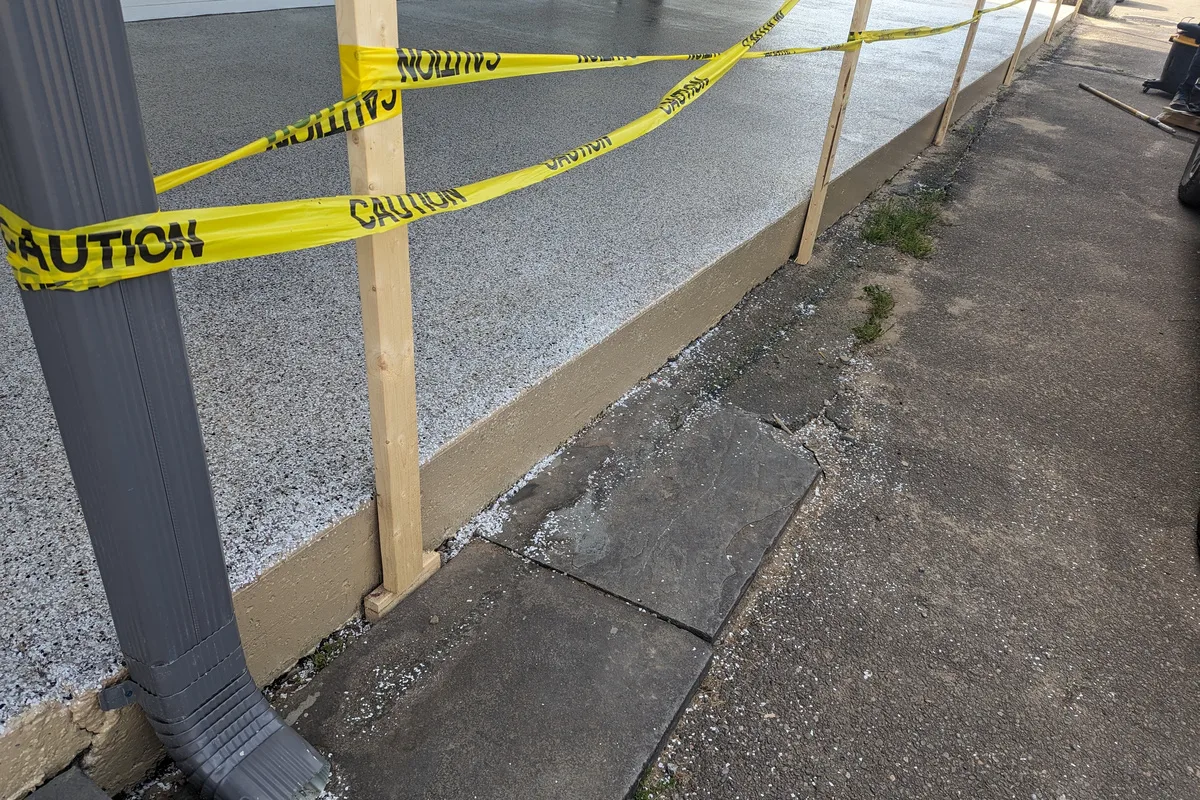
The Milestones Are Not One Event
Ask "how long until I can use it" and the honest reply is another question: use it for what?
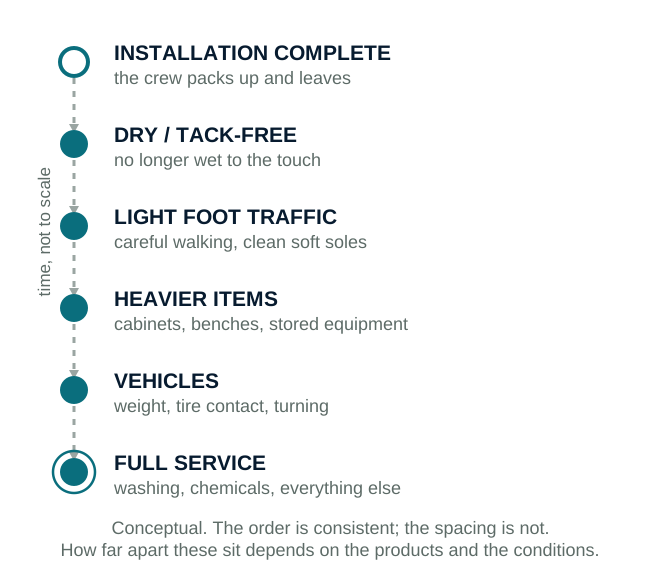
Each stage represents a different demand on the coating, and the coating meets those demands at different points. Some systems move through the sequence quickly and others take considerably longer, but the order stays the same.
Some systems return to service faster than others. The written schedule for the specific products installed is the one that matters, and it is the only one worth planning around.
Dry and Tack-Free
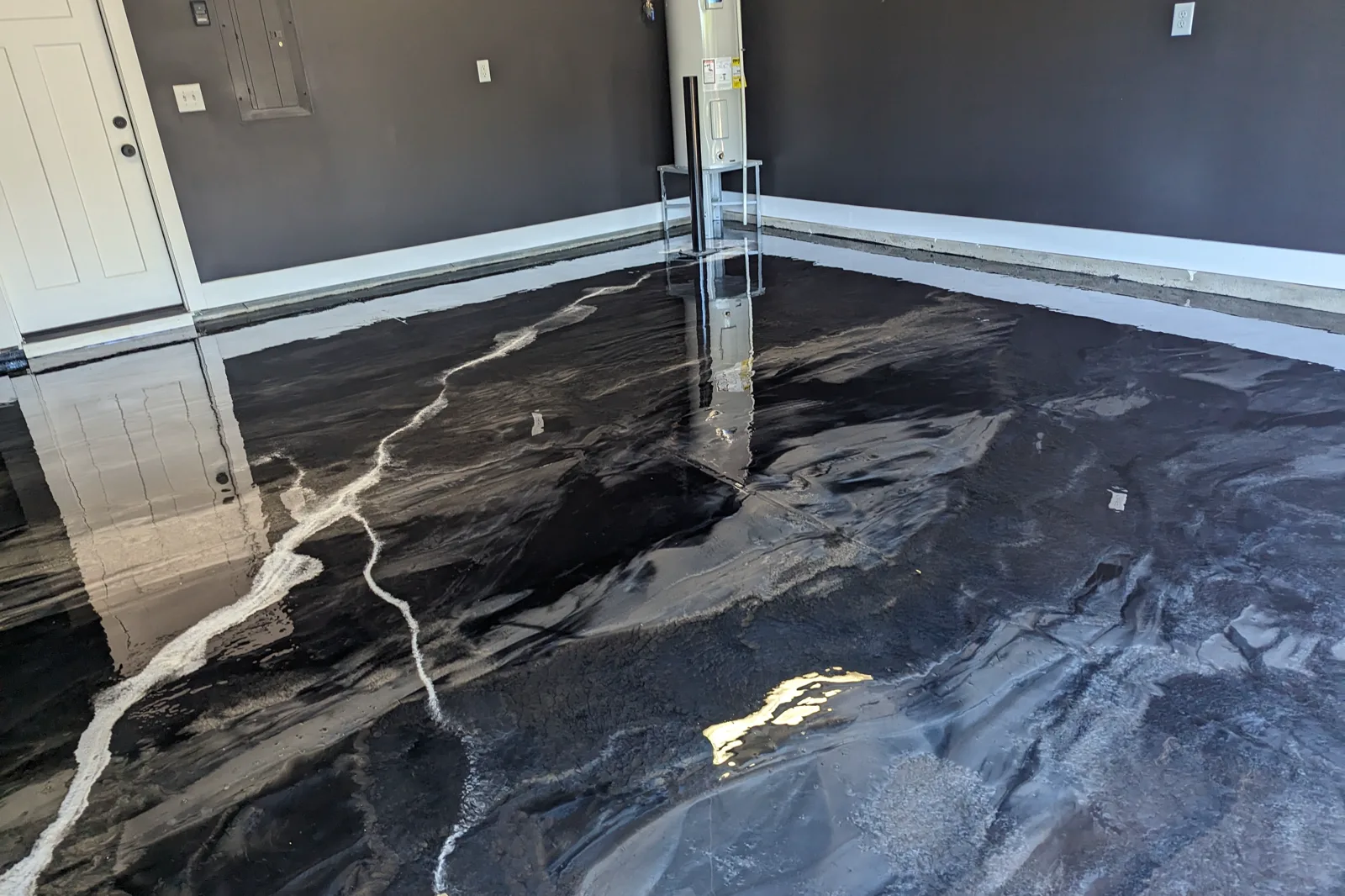
This is the only milestone that is obvious. While a coating is wet you can see it, and nobody is tempted to walk across a floor that mirrors the ceiling.
Tack-free means the surface no longer feels wet and no longer transfers material when touched. It does not mean the coating has developed strength. The film beneath the surface can still be soft, and it can still take an impression from a shoe, a knee, or a dropped tool.
Everything after this point is where people get caught out, because from here on the floor looks exactly the same whether it is ready or not.
Light Foot Traffic
The first release is usually for careful walking only, and the qualifier does a lot of work.
At this stage a coating can generally support someone crossing the floor in clean, soft-soled shoes without marking it. It may still be vulnerable to grit ground in underfoot, to a heel or a pivot that twists against the surface, to a ladder foot, and to anything dragged rather than lifted.
Practical guidance for that first period:
- Wear clean, soft-soled shoes, and keep grit off the floor
- Walk normally rather than turning on the spot
- Keep pets off unless the installer has specifically said otherwise
- Carry things rather than sliding them
- Do not set up ladders, trestles, or work equipment yet
If the surface feels soft, tacky, or takes a visible footprint, stop using it and contact the installer rather than waiting to see whether it recovers.
Heavier Items and Equipment
Returning stored items is a separate release from walking, and it usually comes later.
The reason is contact area. A person distributes their weight across the sole of a shoe. A storage cabinet, a workbench, a motorcycle stand, or a shelving unit concentrates its weight into a handful of small feet, and narrow feet on a coating that has not finished developing its hardness can leave permanent indentations.
Dragging makes it worse than lifting. A cabinet slid across a young coating can scar it even when the same cabinet, lifted into place, would not have.
Ask specifically when stored items can come back, and whether the installer recommends protective pads under narrow feet once they do.
Vehicles
Parking is normally the last of the traffic milestones, and it is the one worth being most patient about, because a vehicle loads a floor in several ways at once. On a residential slab this is usually the milestone that matters most, and the guide to garage floor coating systems covers what else is worth settling before the work is booked.
- Total weight is far greater than anything else that will sit on the floor
- Contact area is small, so that weight concentrates where the tires meet the surface
- Steering twists the tire against the coating, particularly when the wheel is turned while the car is stationary
- Warm tires arrive from the road at temperature and sit on one spot
- Static loading continues for hours, unlike foot traffic which passes over and moves on
Those factors combine, which is why a coating that comfortably handles walking may still not be ready for a car. Tire-related damage to coatings is a recognized phenomenon and it is bound up with how well the system is bonded and how completely it has cured, which is covered in the guide to why coatings come loose.
Chemistry affects how systems behave here, but no product should be treated as immune. When you do park for the first time, make sure the installer has released the floor, keep the floor and the tires clean and dry, drive on and off slowly, and avoid turning the wheel while stationary.
Washing and Water Exposure
Water resistance can develop later than the strength needed to walk on the floor, so washing is its own release rather than something that follows automatically from foot traffic.
Until the installer says otherwise, keep the floor away from rain and standing water, do not wash it, do not park a wet vehicle on it, and watch for condensation in spaces that swing in temperature. When cleaning is allowed, start with whatever mild method the installer specifies rather than reaching for a degreaser.
Exterior and partly covered floors deserve particular attention, because the schedule has to survive the weather rather than a controlled indoor space.
Chemical Exposure and Full Service
Full service is the point at which the system has developed the resistance it was specified for. It commonly arrives after vehicle traffic is allowed, which produces a period where the floor is in normal use but is not yet at full chemical resistance.
That gap matters in a garage or a workshop. Fuel, brake fluid, oil, antifreeze, battery acid, and strong cleaning products are exactly the things a garage floor is bought to withstand, and they are the last thing it becomes able to withstand. Spills during this window should be wiped up immediately rather than left.
Why Conditions Change the Schedule
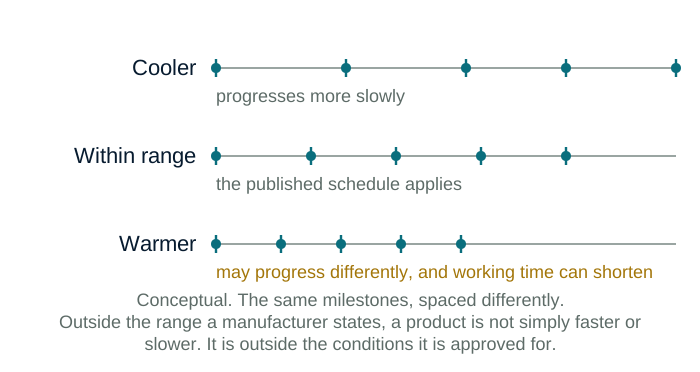
Coatings cure through chemical reactions, and reactions respond to their environment. The same product installed in two different places on two different days will not necessarily follow the same schedule.
The factors that move it include:
- The chemistry of the specific products in the system
- The total build, and how many coats there are
- The thickness of those coats
- The temperature of the slab, which can lag well behind the air
- Air temperature and how much it swings overnight
- Humidity, and how close the slab sits to the dew point
- Ventilation and air movement in the space
- Whether conditions stayed inside the manufacturer's stated range throughout
Cooler conditions generally slow the reaction, so everything moves further out. Warmer conditions can move things closer together, but that is not straightforwardly good news, because heat also shortens the working time the crew had during installation. Neither direction is a bonus. What matters is whether conditions stayed within the range the product is approved for.
This is why a schedule quoted from memory, or borrowed from a previous job, is not reliable. It was true for a different floor on a different day.
Mats, Cardboard, and Anything Else You Put on It
This is one of the easiest ways to damage a floor that was otherwise going to be fine, and it is rarely mentioned until it is too late.
The instinct after installation is protective: lay cardboard down before moving things back, put a mat under the car, cover a section while other work happens. During the cure period that instinct can work against you.
Depending on the product and how far through the cure it is, a covering can:
- Trap moisture or solvent against the surface
- Change how that area cures compared with the rest of the floor
- Leave a visible impression or a difference in sheen
- Stick to the surface and mark it when lifted
- Hold grit against the coating under load
None of this is guaranteed to happen, and plenty of floors get covered without incident. The point is that it is not a neutral, harmless precaution during cure, and the outcome depends on the product.
Do not cover or load a curing floor unless the installer or the manufacturer says it is ready for it. That includes cardboard, rubber-backed mats, plastic sheeting, and drop cloths.
What Happens When a Floor Is Used Too Early
The damage from early use is not always dramatic, and it is not always immediate. Common outcomes include footprints and texture changes, dull patches or a loss of gloss, tire impressions, scratches from stored items, dirt embedded into a surface that was still soft, and marks that cannot be polished out later.
Some of this appears straight away. Some of it shows up months later as premature wear in the areas that were disturbed. The awkward part is that by then the connection to that first weekend is no longer obvious.
Waiting an extra day is almost always cheaper than the alternative.
Get the Schedule in Writing
A single sentence like "you should be fine by tomorrow" is not a schedule. Before the crew leaves, ask for separate written times for each of these:
- Careful foot traffic
- Returning stored items and lightweight belongings
- Heavy furniture, cabinets, and equipment
- Parking vehicles
- Washing the floor and exposure to water
- Placing mats or any floor covering
- Full chemical service
Those seven answers should reflect the products that went down and the conditions on site, and they should come with the cleaning guidance for afterwards. A professional installation should include this as part of handover rather than as something you have to chase.
If the Verbal Guidance and the Product Instructions Differ
Occasionally the time you are given on site does not match what the manufacturer publishes for the product that was installed. This is worth raising, and it is not an accusation.
There are ordinary reasons for a difference. The installed system may combine products with different schedules, and the governing figure is the slowest layer rather than any single one. Site conditions may have been cooler or more humid than the published figures assume. The data sheet you found online may describe a different variant of the same product family, or a different film thickness.
The useful approach is to ask which product the schedule refers to, and whether the conditions on the day changed it. A contractor who knows their system will have a straightforward answer. If the answer is not clear, waiting longer costs nothing, and using the floor early can cost a good deal.
The Bottom Line
A floor coating looks finished before it is finished, and it becomes ready for different things at different times rather than all at once.
The sequence is reliable: dry, then careful walking, then stored items, then vehicles, then full service. The intervals are not, because they depend on the products, the build, and the conditions. Fast-curing systems compress that sequence and slower ones stretch it, which is one of the real practical differences between coating systems.
If you take one thing from this: ask for the seven release times in writing, and treat anything vaguer than that as a reason to ask again.