
Charlotte contractor guide
Compare epoxy flooring contractors in Charlotte, NC
If you are weighing a floor coating project in Charlotte, NC, the hard part is rarely finding a contractor. It is knowing what to ask them, and how to tell whether two proposals describe the same job. This page is a Charlotte starting point for commercial, industrial and garage projects: what each kind of project tends to turn on, what to have ready, and how an introduction through Epoxy Pro Leads works.
Epoxy Pro Leads is an independent education and contractor-introduction resource. We do not install floors, employ crews or price your project, and the choice of contractor stays yours. The detail on each coating system lives in our service guides, which this page links to rather than repeats.
Start with how the space is used, not with a product name.
Slab condition shapes more of a proposal than the finish does.
Two proposals are only comparable when they answer the same questions.
The Charlotte market
Charlotte floor coating projects, and how they differ
Epoxy Pro Leads concentrates on three kinds of project: commercial buildings, industrial facilities and residential garages. Commercial and industrial floors are our main focus, and garages are a secondary one. When a request comes in for a Charlotte property we read the details, and where it is a fit we pass it to a contractor who takes on that kind of work.
The three behave differently once a contractor starts pricing. A business is usually working around opening hours and cleaning routines. An industrial floor is working around loads, chemicals and a shutdown window. A garage is working around a household schedule and years of vehicle wear. The sections below say what to settle first for each, then point to the guide that covers the systems in detail.
Commercial
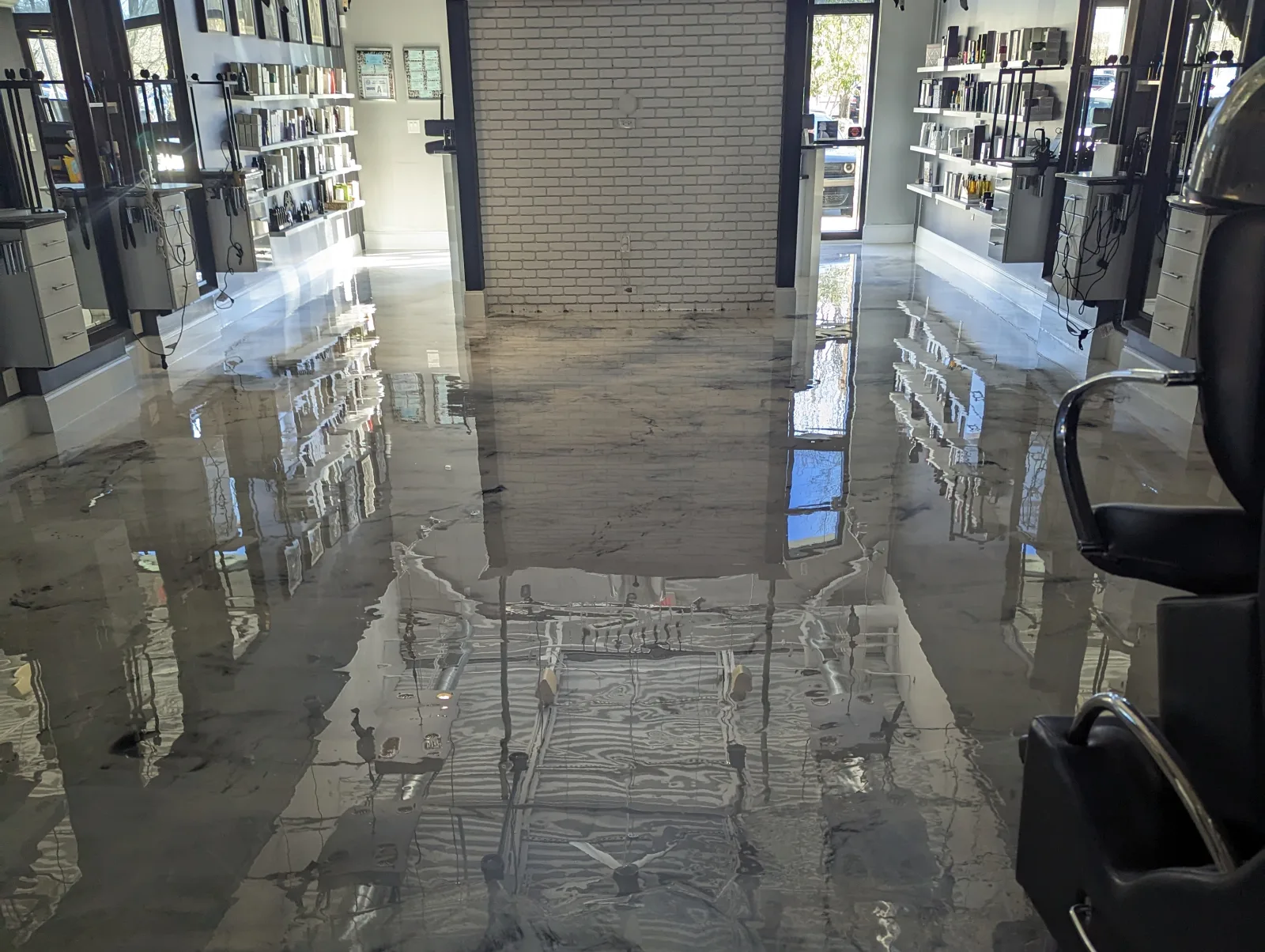
Commercial epoxy flooring in Charlotte
For a commercial floor, the questions that shape a proposal are about the business rather than the product: when the space can close, how it is cleaned, how much foot and cart traffic it takes, and what gets spilled on it. Retail floors, showrooms, service areas, corridors and back-of-house routes all fall here.
Settle how the space is used and what window you have before you compare finishes. The commercial guide covers slab condition, texture, downtime and what a proposal should specify layer by layer.
Industrial
Industrial floor coatings in Charlotte
Plants, warehouses, workshops and service facilities ask more of a floor than a showroom does: forklifts and pallet jacks, dropped tools, wash-down, heat and process chemicals. Not every contractor takes industrial work, so say early that yours is industrial. It changes the specification, the schedule and who is a fit.
The shutdown window matters as much as the system, because a coating has to be able to cure inside the time the facility can give it. The industrial guide covers loads, chemicals and wash-down in detail.
Residential
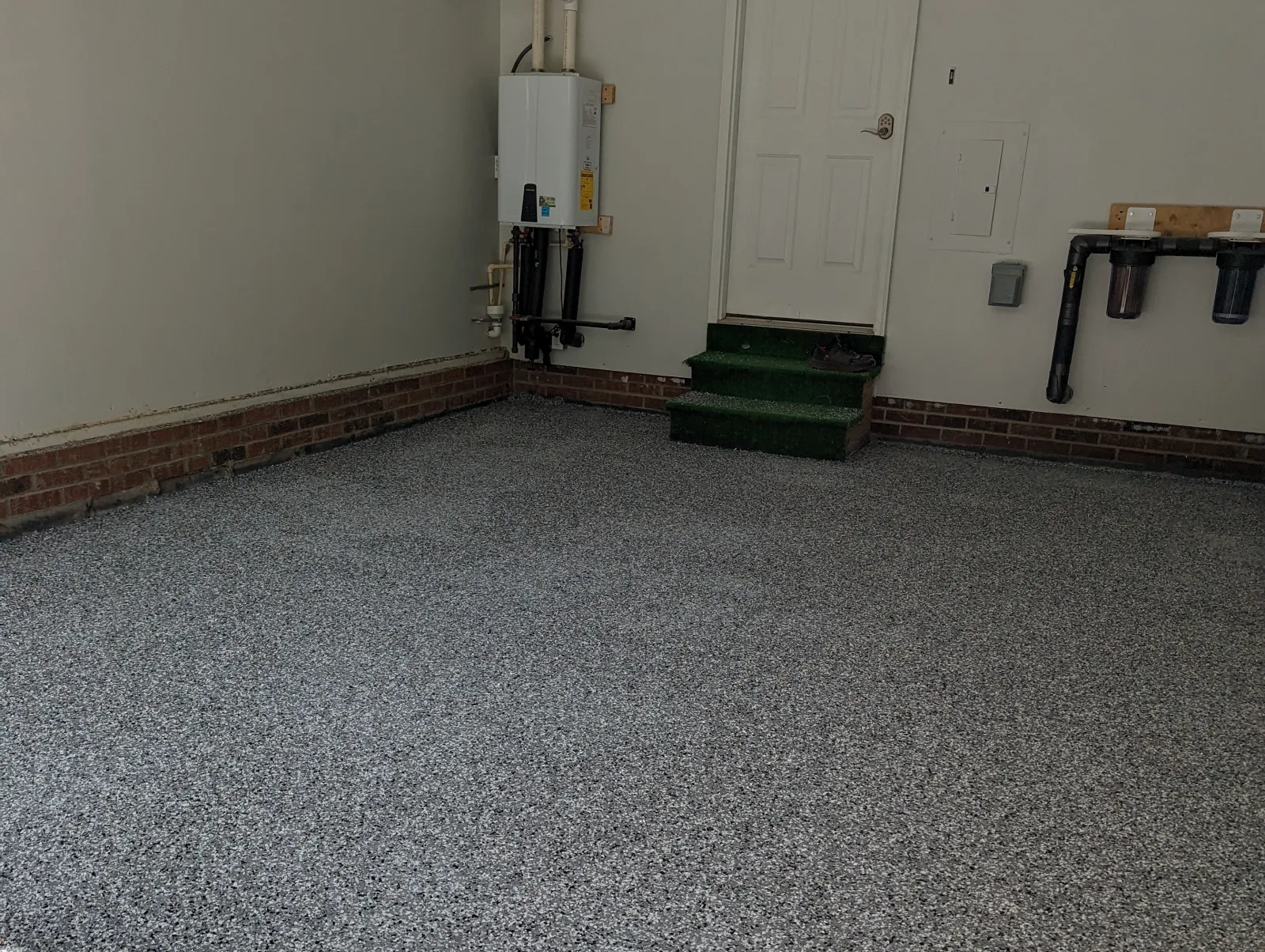
Garage floor coatings in Charlotte
A garage is a different kind of job. The slab has usually taken years of vehicle traffic, road grit and spills, the finish is normally decorative, and the household needs the cars back inside on a schedule it can plan around. For a garage floor coating, the useful things to settle are the condition of the concrete, which areas are included (down to the steps) and how long you can be without the garage.
The garage guide covers preparation, finishes, what changes the scope and what a quote should define. The installation-process article walks through the sequence from slab to return to service.
Where to start
Choosing a floor coating contractor in Charlotte
Before comparing companies, it helps to be able to describe the job in a way that any contractor can price. Five things do most of that work, and together they turn a vague enquiry into a brief. A brief is what makes competing proposals comparable, and it also changes who is a fit: a company that does careful residential garages is not automatically the one you want for a warehouse working around a shutdown.
None of it requires knowing which system you want. It describes the problem rather than the solution, and proposing the second from the first is the contractor's job. Where a company skips straight to naming a product without asking any of it, that is worth noticing.
- How the space is used: vehicles, foot traffic, equipment, wash-down, chemicals.
- Slab condition: age, cracks, an existing coating, staining, any history of moisture.
- Finish: flake, metallic, a solid color, or whatever the space needs it to be.
- Downtime: when the area can close, and for how long.
- Scope: the floor alone, or steps, thresholds and adjoining spaces as well.
Finishes
Decorative and specialty finishes
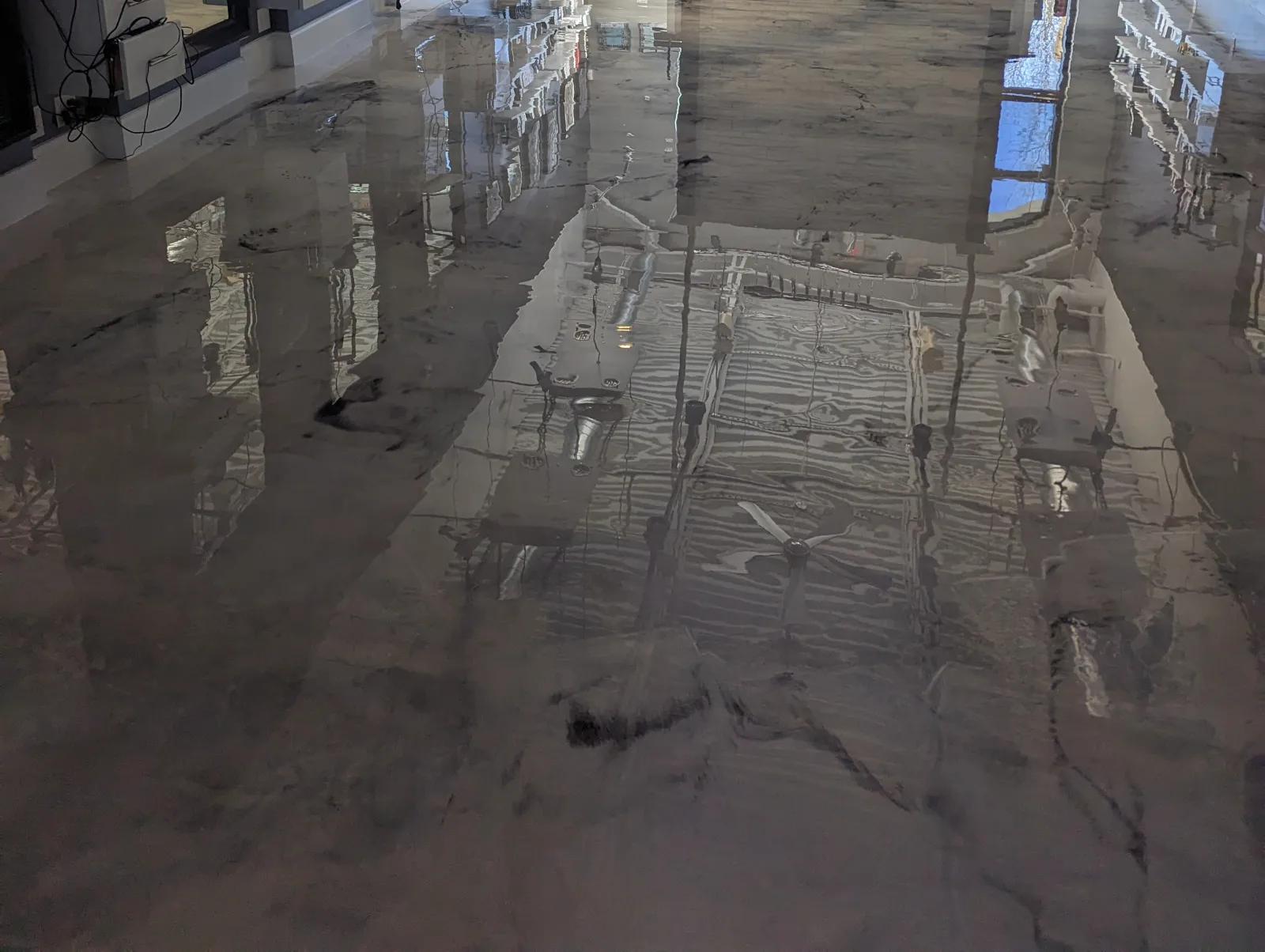
Decorative floors mostly go one of three ways. Flake broadcasts colored chips into a wet coat, which breaks up the surface and hides marks. Metallic moves pigment through a resin coat while it is still liquid, so the pattern forms once and cannot be repeated. Polyaspartic is a chemistry rather than a look, and it often turns up at the surface of either build.
They are not interchangeable, and the right one depends on the space rather than on which sounds newest. Each has a guide of its own, so read the one that matches what you are picturing before a contractor talks you into or out of it.
Substrate
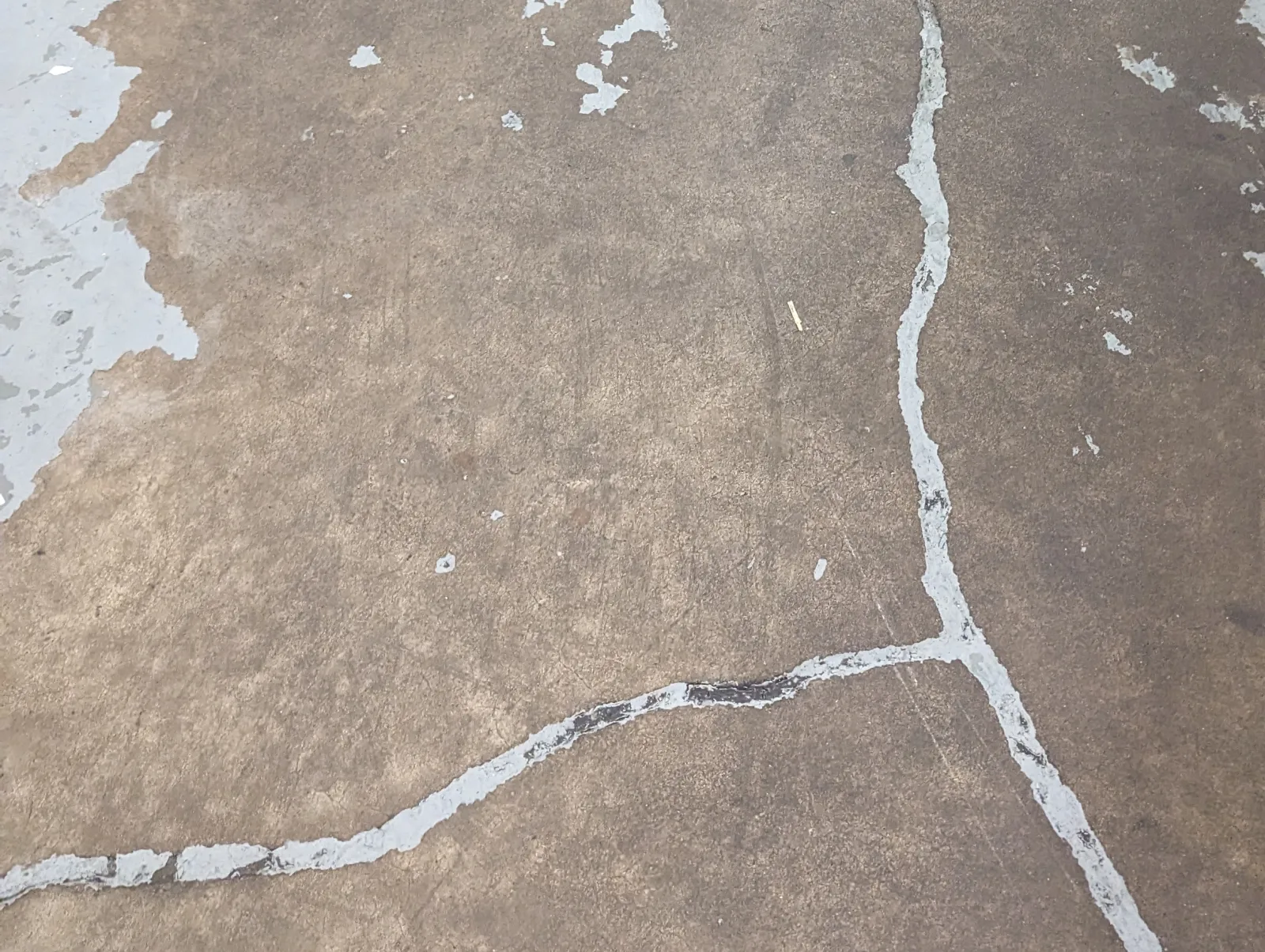
Preparation is where proposals differ
Whatever the finish, the slab is what a proposal is really about. Preparation is where an existing coating comes off, where cracks and joints get dealt with and where the concrete's real condition finally shows itself. It is also the easiest part of a job to leave out.
When two proposals for the same floor are far apart on price, preparation is usually where the difference sits, so ask each contractor to describe it in writing.
The visit
What a site visit should cover
Most contractors will want to see the floor before pricing it, and what they do while they are there tells you a good deal. Someone who measures, looks at the edges and transitions, asks how the space is used and checks what is already on the concrete is building a proposal around your floor. Someone who glances at it and quotes a rate per square foot is pricing an average.
It is a reasonable moment to ask questions rather than only answer them, and the answers are far easier to weigh up later if every contractor was asked the same ones.
- Did they measure the area, or estimate it by eye?
- Did they look at the edges, thresholds and any steps, not just the open floor?
- Did they check what is already on the slab, and test it anywhere?
- Did they ask how the space is used, and when it can be closed?
- Did they raise moisture, drainage or an existing crack before you did?
- Did they explain what would change the price once the work has started?
Checklist
What to compare between Charlotte proposals
Proposals get much easier to read side by side once they answer the same questions. These are the ones worth putting to every contractor on your list.
- The preparation method, and what happens if the slab is worse than it looked.
- How cracks, joints, spalling and any contamination will be handled.
- The system written out layer by layer, with the products named.
- The finish proposed, and the sheen and texture to expect from it.
- Which areas are included: floor, steps, thresholds and adjoining spaces.
- The return-to-service schedule for the products going down.
- How a change in scope gets priced once the work has started.
- What the contractor warrants, for how long, and what would void it.
Your details
What to include when you ask for an introduction
The more of this you can say up front, the faster a contractor can tell you whether the job is a fit for them, and the less time you spend on calls that were never going to go anywhere.
- Project type: garage, commercial, industrial, or something else entirely.
- The property's ZIP code, which the request form asks for.
- Approximate area, even as a rough figure.
- The current floor: bare concrete, an existing coating, tile, or something else.
- How the space is used day to day.
- The finish you have in mind, if you have one yet.
- Your timing, and any date the space has to be back in use.
Next step
How a contractor introduction works
Epoxy Pro Leads is an independent education and contractor-introduction resource. We are not the installer, we do not employ crews, and we do not price, specify or inspect your floor.
When you send a request we read the details, including the project type and the property's ZIP code, and where it is a fit we pass it to one contractor who works in your area and takes on that kind of project. Nothing about that obliges you to hire them, and you stay free to compare other proposals.
If other contractors are already quoting the same floor, it is worth saying so. It is not a problem, and it saves everyone finding out later.