
Metallic floor systems
The other decorative approach: formed in the liquid, reflective, and never repeatable.
Visit pageCommercial and industrial floor coating guidance, with residential garage flooring resources
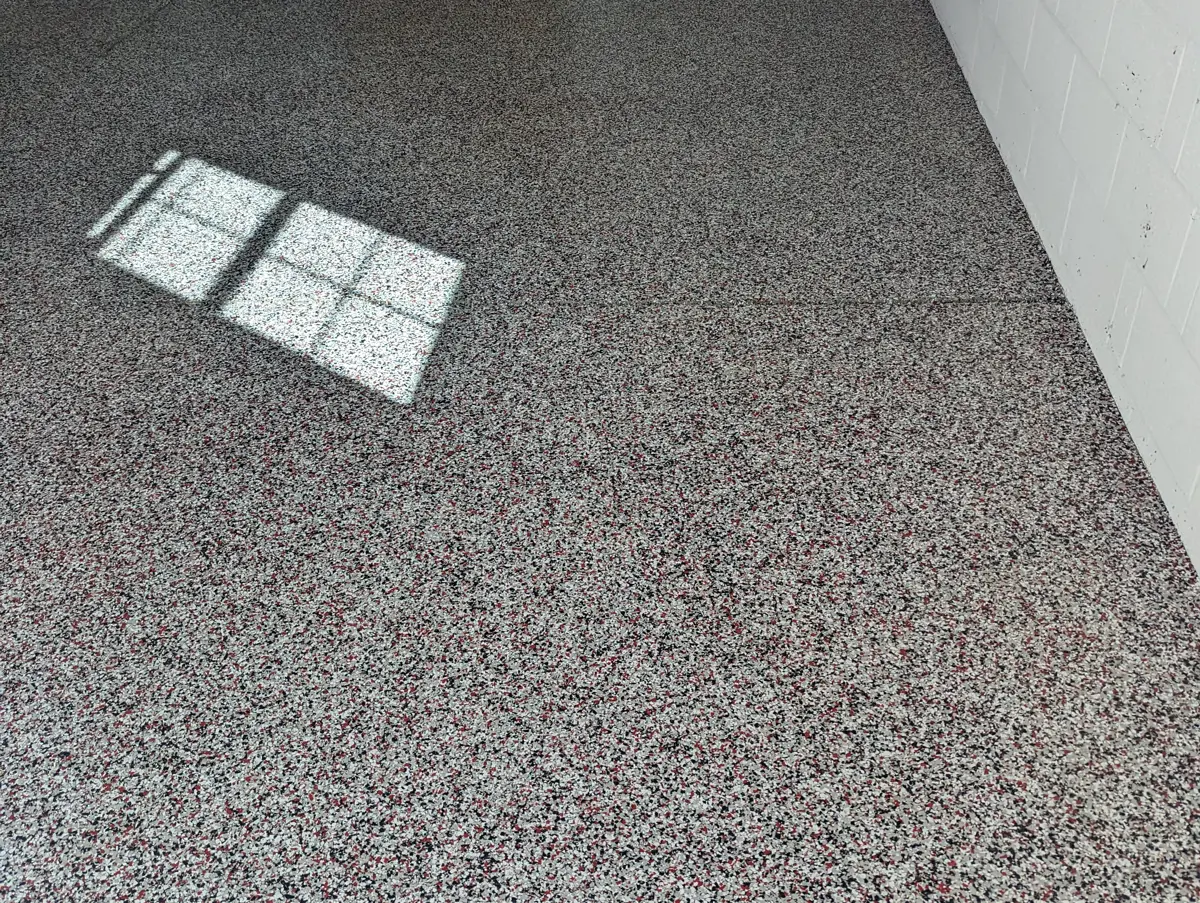
Flake systems
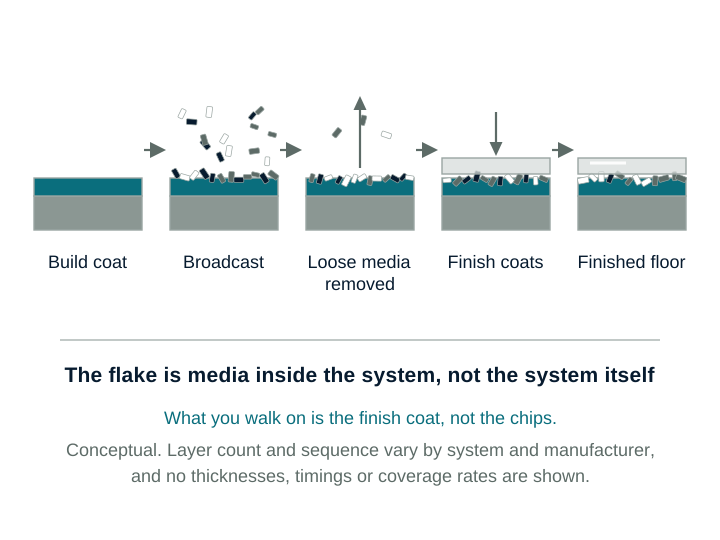
Flake is the decorative media inside a floor system. It is broadcast into a resinous coating while that coating is still wet, and finish coats go over the top, so what you end up walking on is the finish, not the chips.
That distinction matters when comparing proposals, because two floors described as flake can be built very differently.
The flake is one layer in a system, not the system itself.
Blend, base colour, broadcast density and finish coat all change the result.
A proposal should describe the whole build, not just the colour of the chips.
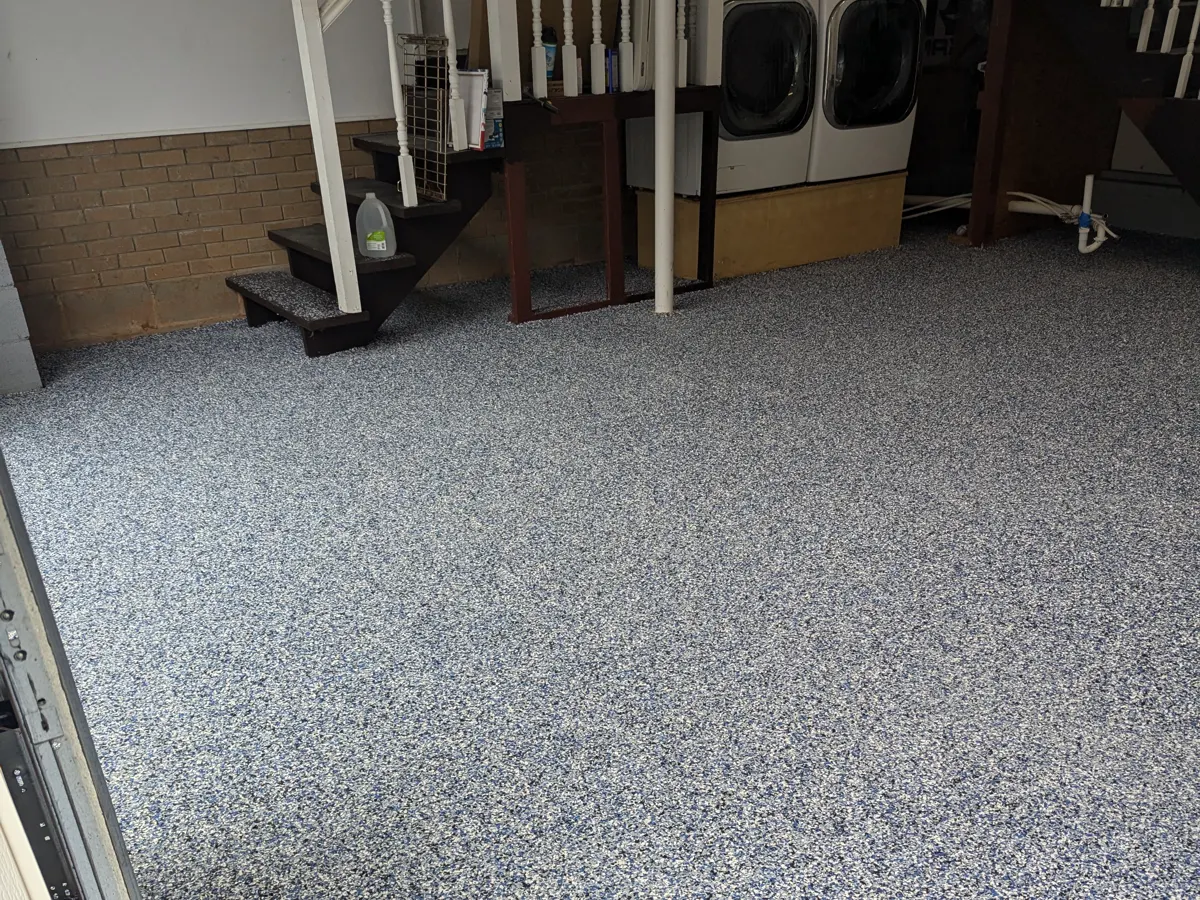
The idea
The chips arrive as dry decorative media. They are thrown into a wet coat so they settle into it, and once that has cured the surface is cleaned back and finish coats are applied over the whole thing.
By the time the floor is finished, the flake is sealed inside the build. It supplies the look; the layers around it do the rest of the work.
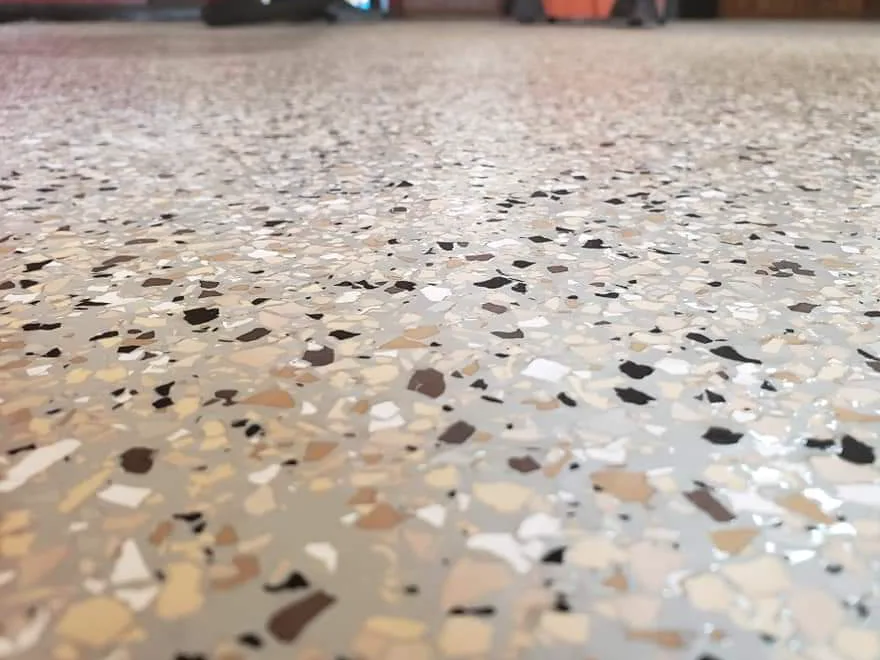
The media
Their job is mostly visual. A blend of colours breaks up the surface, disguises small variation in the concrete beneath, and hides everyday dust and marks far better than a plain colour does.
They also give the surface a visible grain, and depending on how the floor is finished, something you can feel underfoot. What they do not do on their own is make the floor durable. That comes from the system as a whole.
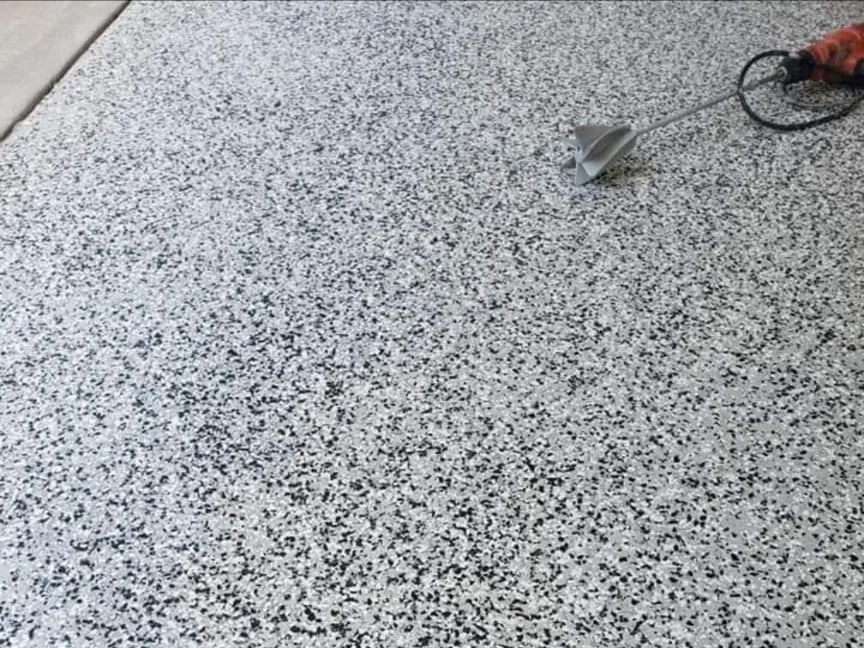
Coverage
Media can be broadcast lightly, so the base colour still shows through between the chips, or heavily, so the chips cover the base almost completely. Both are normal, and they produce very different-looking floors.
Coverage also affects how much the surface has to be worked afterwards and how many finish coats it takes to bury the texture. Ask which approach is being proposed and what it will look like when it is done.
Appearance
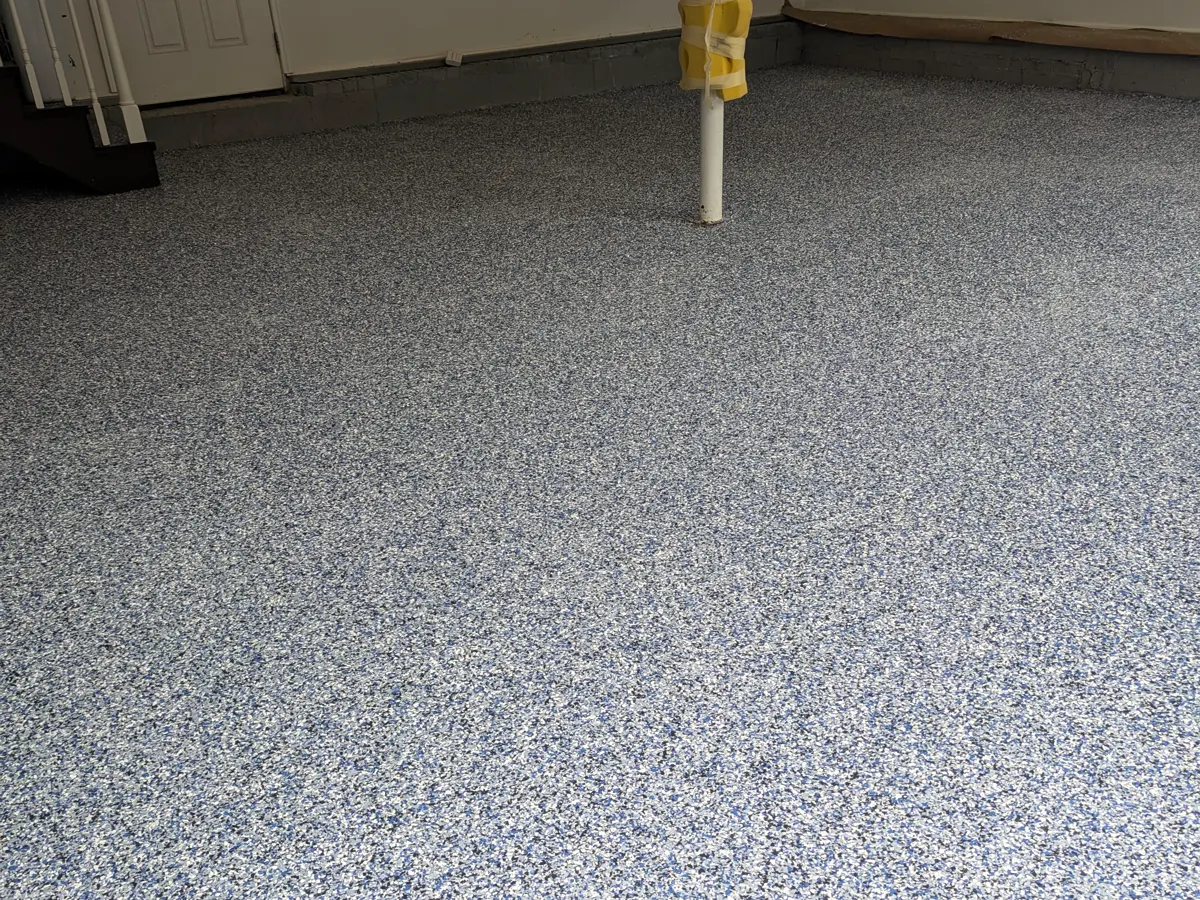
Blends can be stocked mixes or made up for one job. The number of colours, how much they contrast, the size of the chips, and the colour of the coat underneath all pull the finished floor in different directions.
High contrast reads busier and hides marks well. A tighter range reads calmer and shows more. Neither is better; they are different answers to how the space is used and what is around it.
Substrate
A decorative surface cannot compensate for what is underneath it. Contamination, damaged or weak concrete, moisture and unresolved slab problems affect a flake system exactly as they affect a plain one.
Installation
Media only locks in properly while the coat beneath it is still able to take it. That gives the crew a window rather than an open-ended job, which is why flake work tends to be planned around area, access and the number of people on site.
Between coats
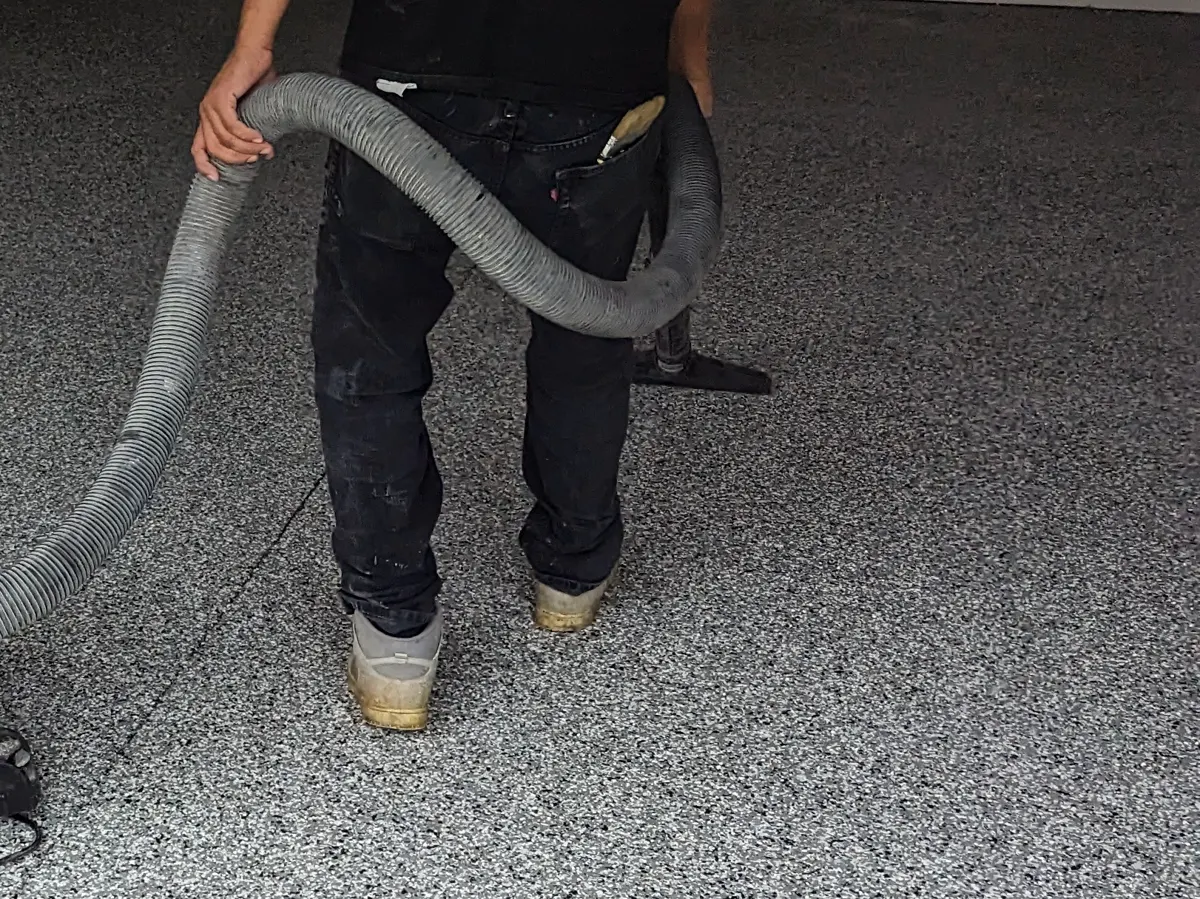
Not every chip bonds. Loose media is taken off once the coat below has cured, and depending on the system the surface may also be scraped or worked back so the next layer goes on evenly.
It is unglamorous work and it is easy to under-do. How thoroughly it is done shows up in the finished surface.
Finish
Once the media is down, the finish coat is what you actually touch, clean and wear out. It sets the sheen, how smooth or textured the surface feels, how easily it cleans, and how it handles daylight where the floor gets any.
Which product suits a given floor depends on the space and on the published data for the products involved, not on a general rule about one chemistry.
Tradeoff
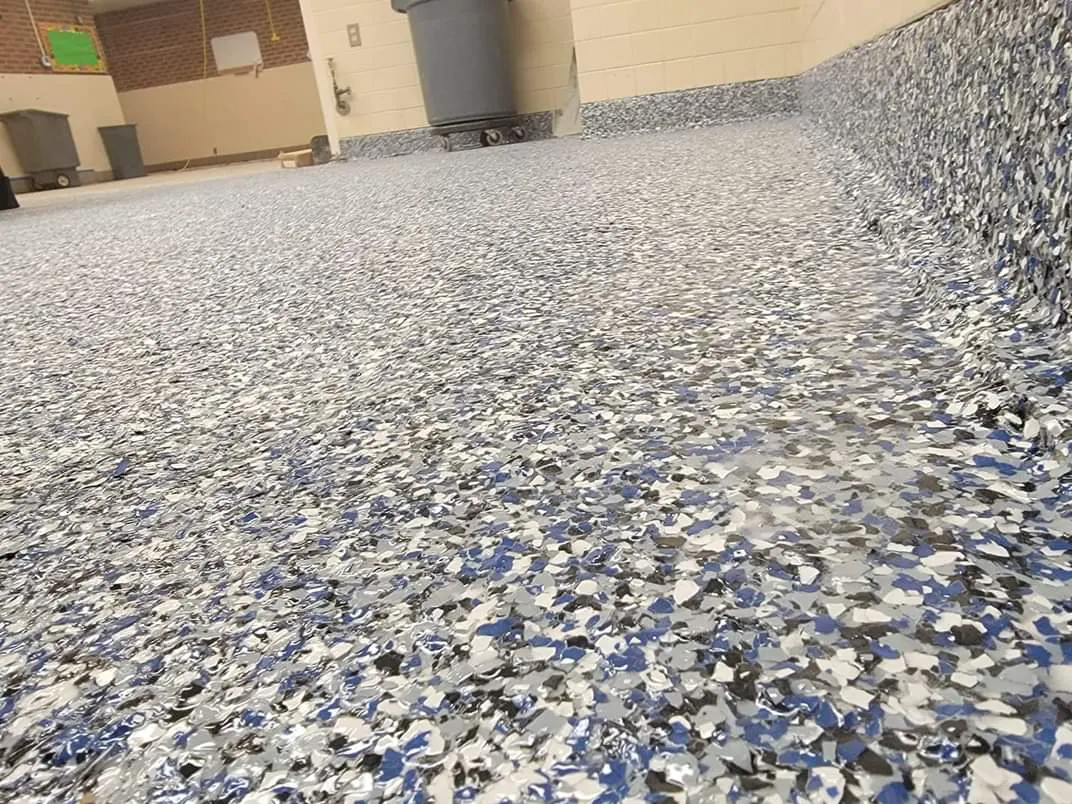
A flake floor can be finished close to smooth or left with noticeable grain, and the rougher it is the more it holds on to soil that a smoother surface would release.
Texture is often discussed as a safety measure. Slip performance depends on the complete finish, any additive used, how the floor is maintained, what gets spilled on it, footwear and conditions, so it belongs in the specification rather than in a general claim about flake.
Where they fit
Garages, showrooms, workshops, utility and service spaces, and plenty of commercial areas. Flake suits places that want a hard-wearing surface that does not show every mark, and where a uniform colour would look stark or dirty quickly.
It is not the right answer everywhere. Where the environment is the harder problem, the system should be chosen around that first and the finish decided afterwards.
Expectations
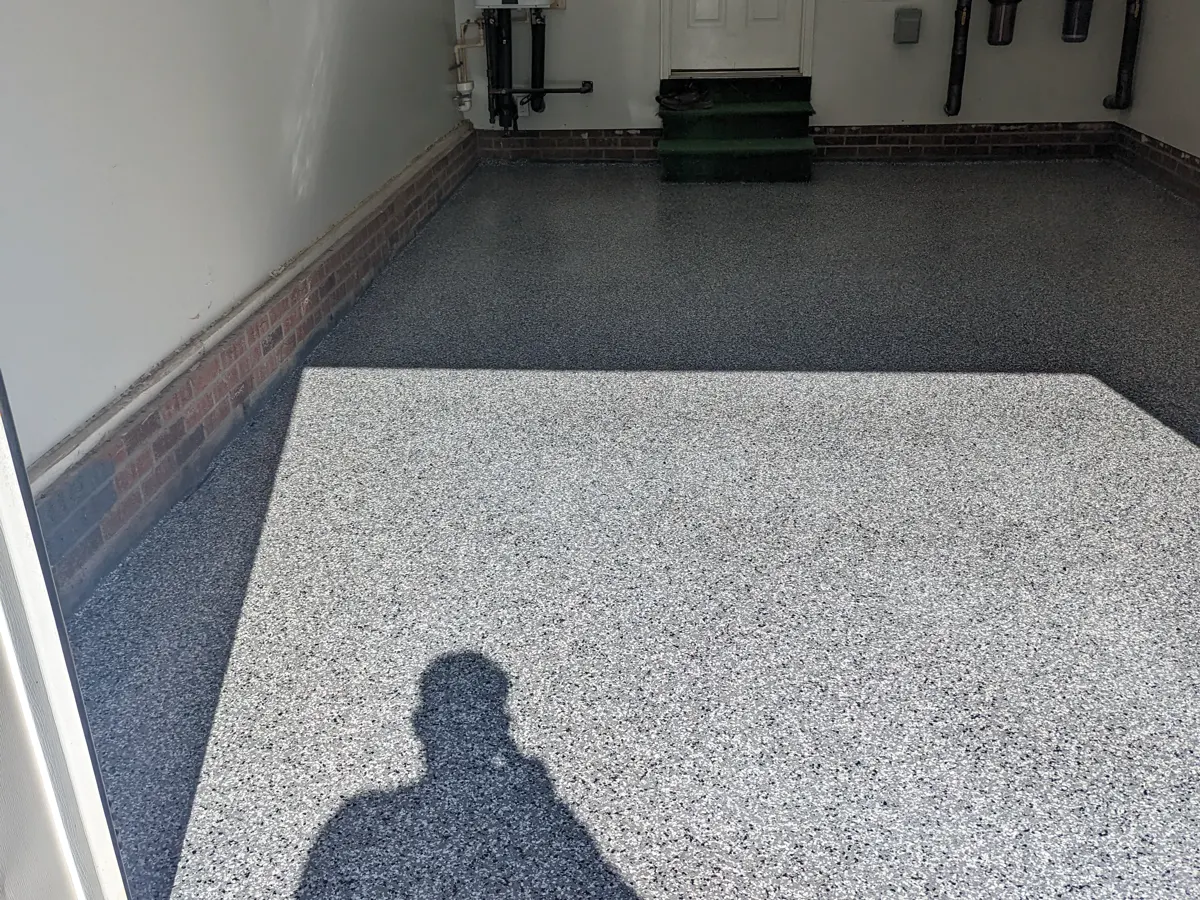
Blend, base colour, how densely the media was broadcast, chip size, how many finish coats went on, and the sheen of the final coat all move the result. So does the room: the same floor changes character under daylight, under shop lights, and in shade.
It is worth seeing a proposed blend in the actual space, in the light it will live in, rather than deciding from a photograph.
Checklist
A flake proposal is easier to compare when it answers the same questions as the others.
Next step
Epoxy Pro Leads is an independent education and contractor-introduction resource. We are not the installer, we do not employ crews, and we do not price, specify or inspect your floor.
When you send a request we read the details, and where it is a fit we pass it to one contractor who works in your area and takes on that kind of project.
Related pages
The other decorative approach: formed in the liquid, reflective, and never repeatable.
Visit pageWhat happens to the slab before any decorative system goes down.
Visit pageThe full installation sequence, with flake, quartz and metallic builds compared.
Visit pageWhen the environment matters more than the finish, start with the commercial decision framework.
Visit pageNext step
Share the project type, concrete condition, space use, and timeline so Epoxy Pro Leads can help route the request toward a qualified contractor conversation.
Submitting a request does not obligate you to hire a contractor.