
Decorative flake systems
The other common decorative approach, and a far more predictable one to specify.
Visit pageCommercial and industrial floor coating guidance, with residential garage flooring resources
Metallic systems
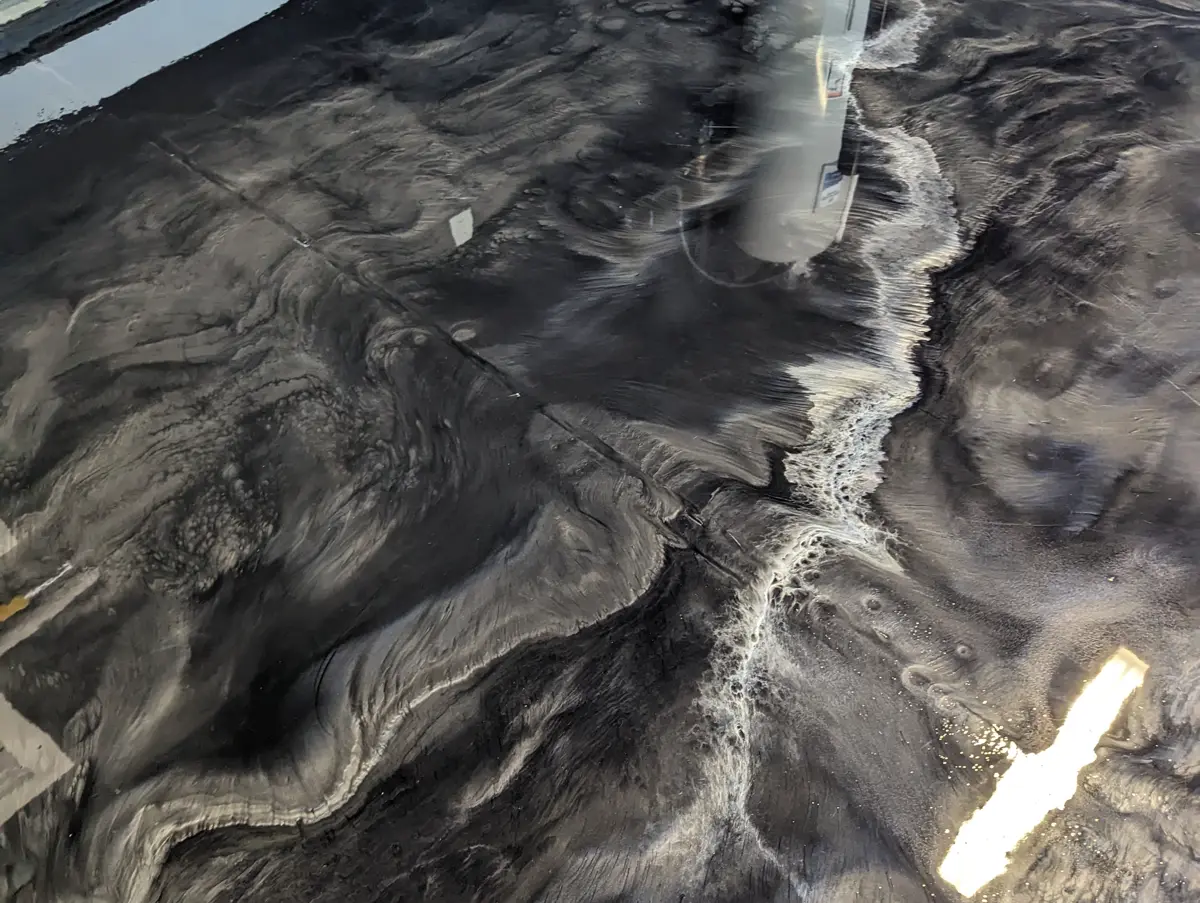
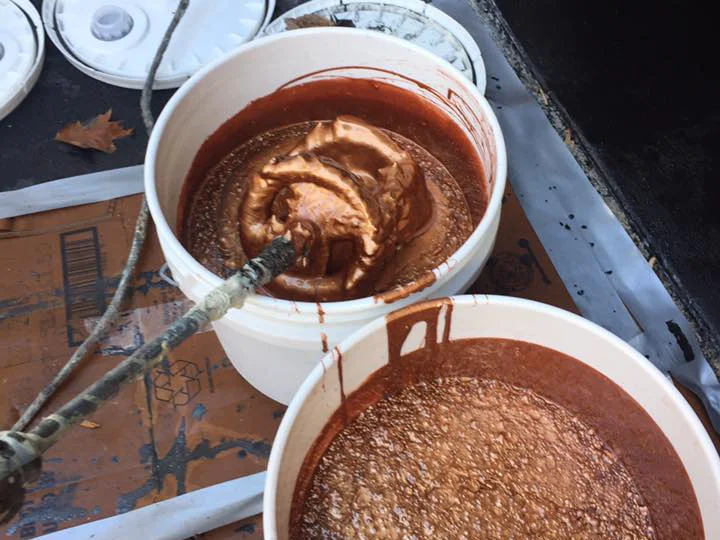
A metallic floor gets its look from pigment suspended in a resin coat that is moved while it is still liquid. The pattern forms in that one layer, sets as it cures, and is then sealed under a finish coat.
That makes it the least repeatable finish on the site, and the one where technique matters most. It also means the metallic layer is part of the system, not the whole of it.
The effect lives in one decorative layer, sealed under the coats above it.
No two metallic floors match, and the same crew cannot reproduce one exactly.
What you clean and wear is the finish coat, not the metallic layer.
The idea
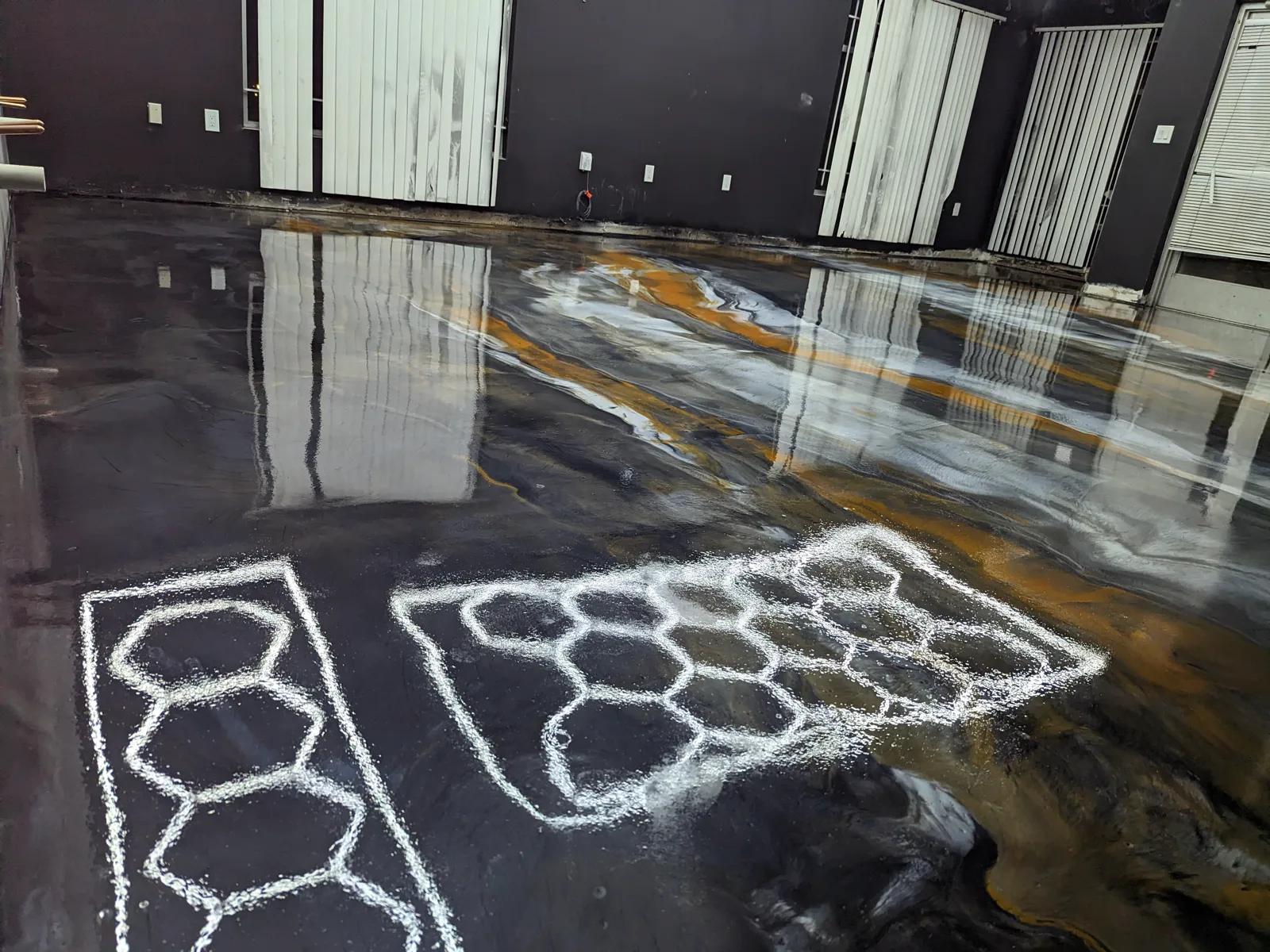
Metallic pigment is a fine, reflective powder dispersed into a clear or tinted resin. Spread across a floor and worked while it is still wet, it separates and gathers into veins, clouds and cells, and that movement is what reads as depth once the floor has cured.
Nothing about the effect is printed, applied as a sheet, or chosen from a pattern. It is produced by the material behaving in a particular way for a short time.
The distinction
It is easy to talk about metallic as though it were a type of floor. It is closer to a decorative technique applied within a system that also needs a prepared slab, something underneath to build on, and something over the top to protect it.
That distinction matters when comparing proposals. Two quotes can both say metallic and describe quite different builds underneath.
Application
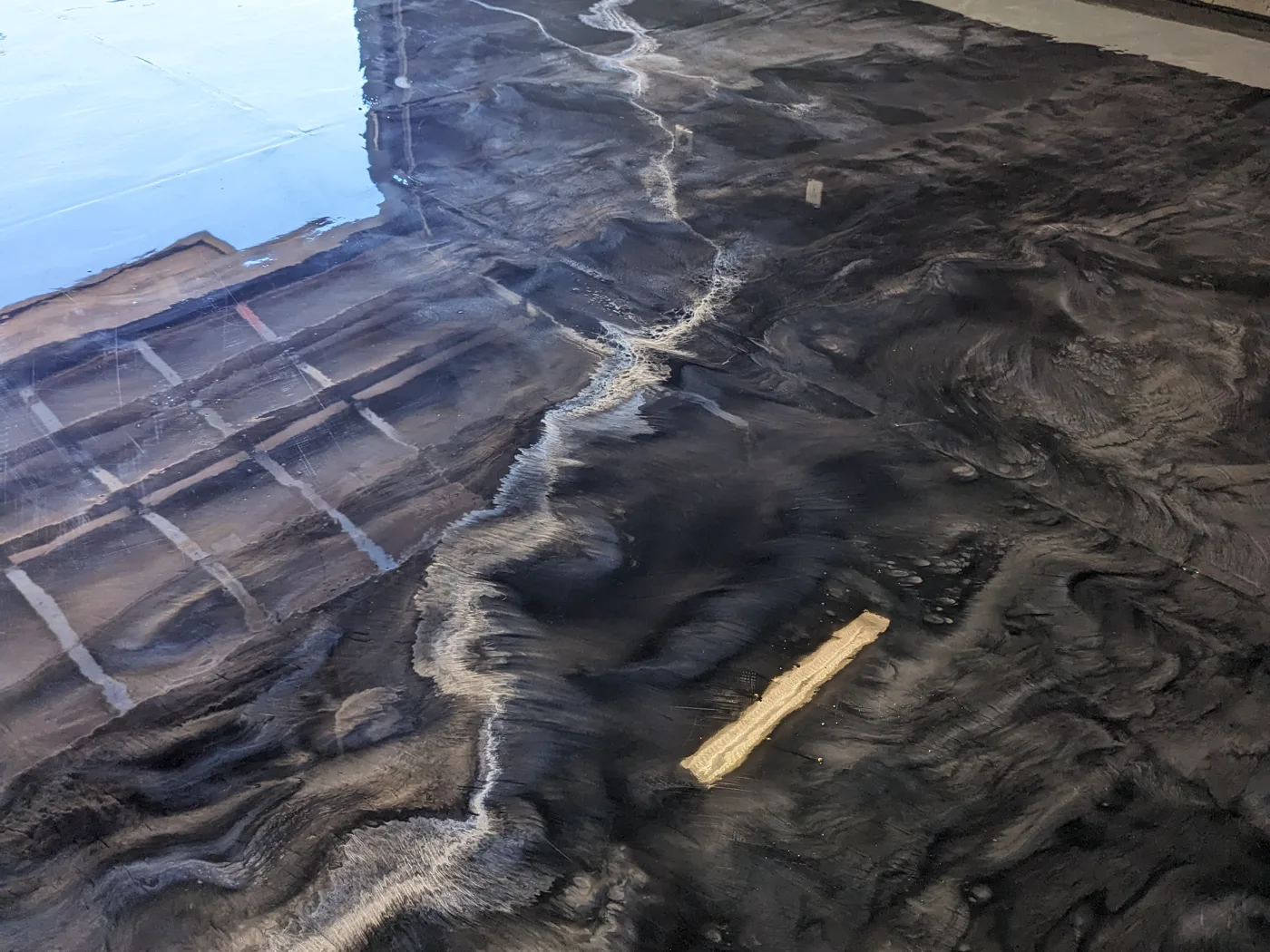
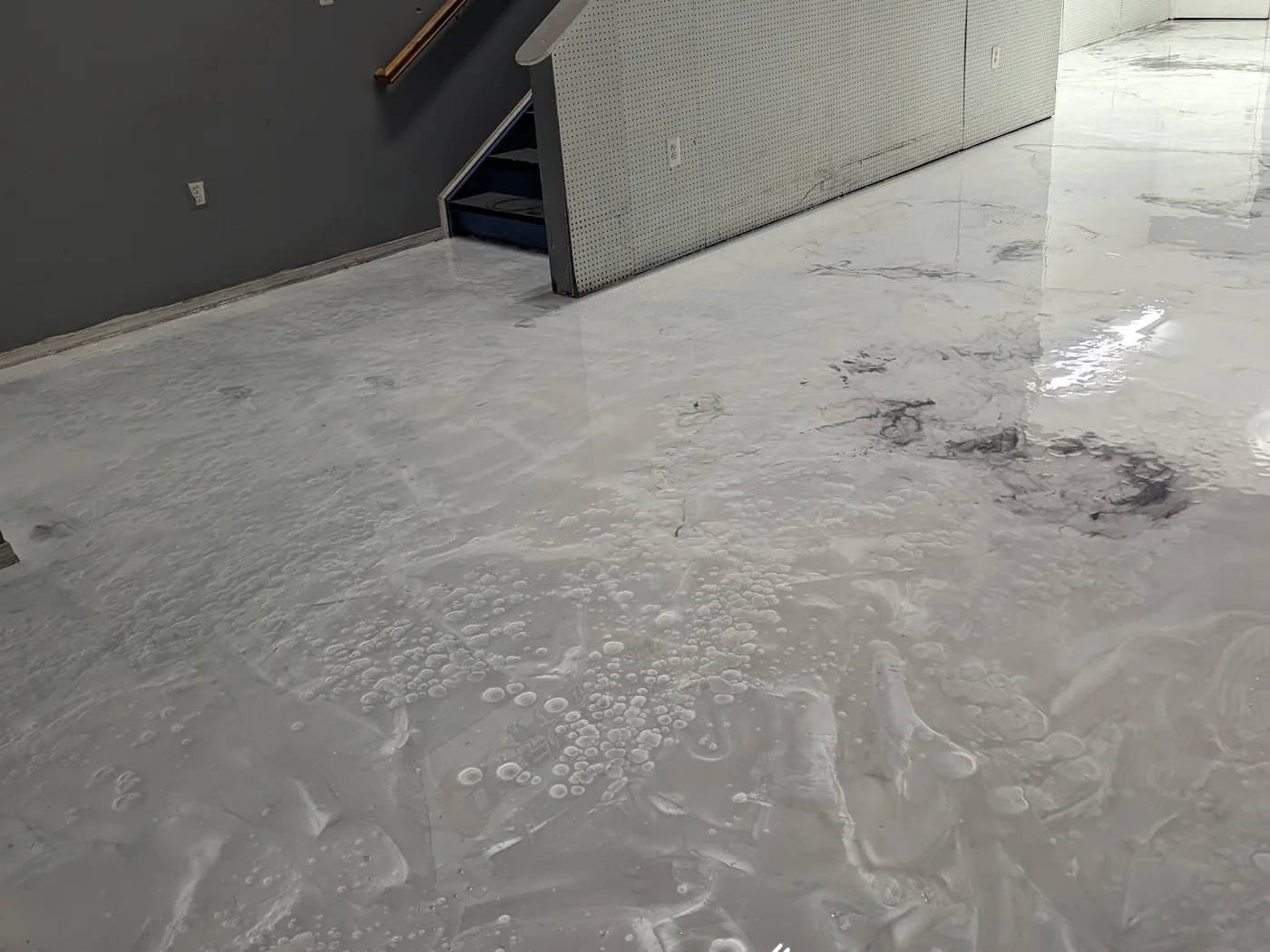
Once the material is on the floor it is spread, pulled and worked until the installer is satisfied with how it is moving. Some effects come from how it is laid out, some from how colours are introduced into each other, and some from what the material does on its own as it levels.
There is a window for all of it. When the resin stops moving, the pattern is fixed.
Variability
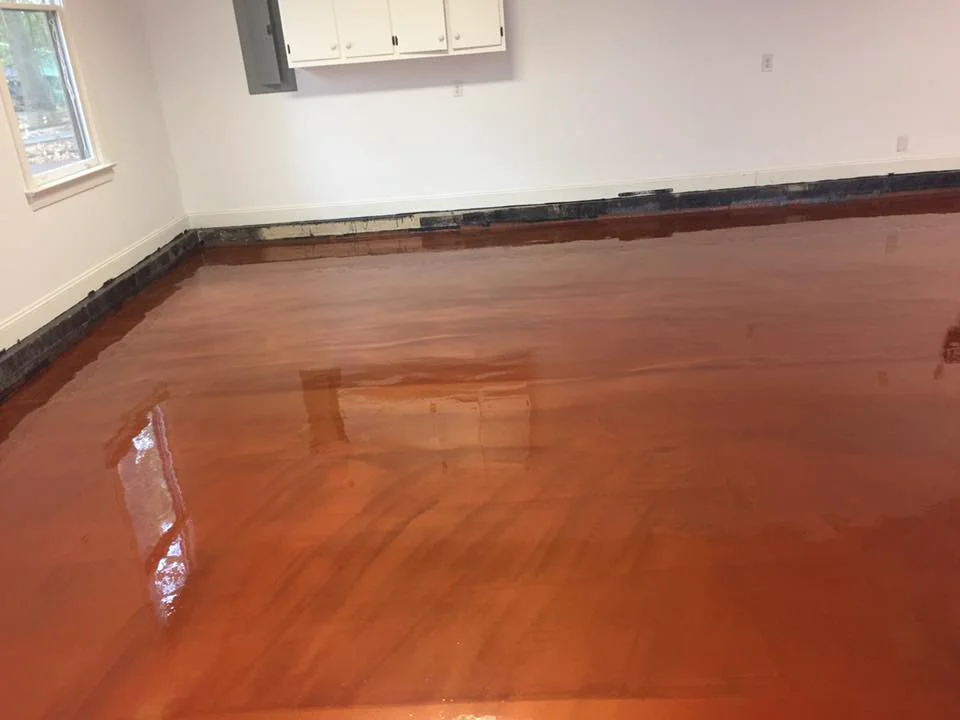
The pattern depends on how the material was placed and worked, how it flowed on that slab, and what the conditions were on the day. Repeat the same products in the same room and the result will be recognisably similar but not identical.
This is worth accepting up front rather than discovering later. A metallic floor should be chosen because you like the character of the finish, not because you expect a specific photograph to be reproduced.
Choices
Colour is the part you can genuinely direct: base tone, the pigments introduced into it, and how much contrast there is between them. Warm coppers, cool greys, near-black with a bright vein, and soft marbled whites are all achievable directions.
How that colour distributes itself is a range rather than a decision. Ask what the installer expects the finish to look like in your space, and whether they have done that direction before.
Substrate
A reflective floor is unforgiving. Because a metallic surface throws light back at you, dips, trowel ridges and patch lines in the slab underneath tend to show more than they would under a matt or textured finish.
Everything that applies to preparation generally applies here, with less margin.
Build
A metallic build generally runs from a prepared slab, through a primer where the substrate calls for one and a base coat that sets the background, to the metallic layer itself and then one or more finish coats.
Layer counts and products vary between systems, and the metallic layer is only one of them. Ask for the build written out rather than a single product name.
Finish
Most metallic floors are finished with a high gloss, because gloss is what makes the depth visible. A satin or matt finish is usually possible and will flatten the effect to some degree.
Gloss and texture are decided by the finish coat, not by the pigment. If the floor may get wet, or the space needs more grip than a smooth finish gives, that is a conversation about the finish coat and any additive in it, and it should be settled in the specification rather than assumed.
Good fit
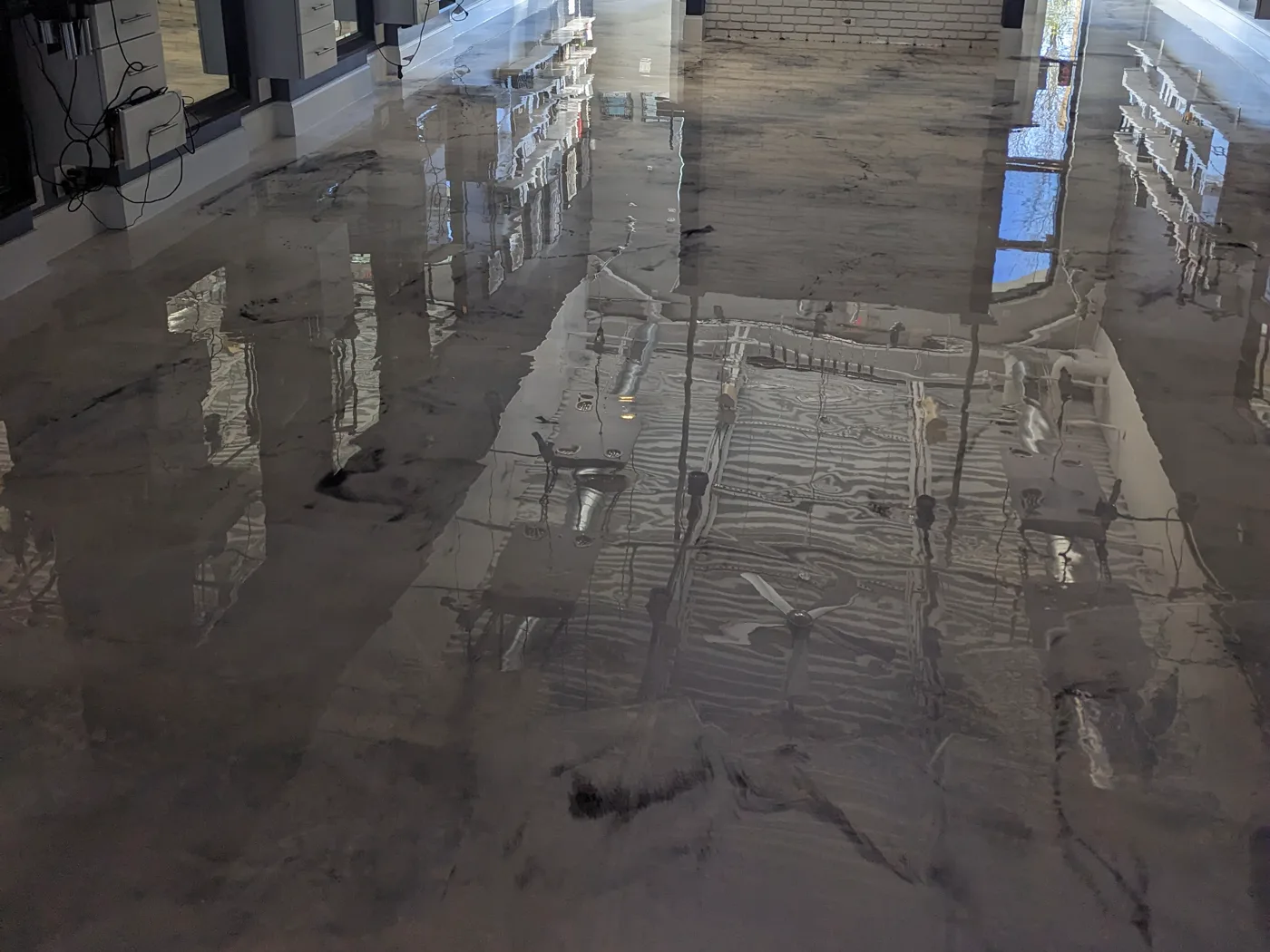
Showrooms, retail floors, salons, offices, lobbies, basements and feature rooms at home. In short, interiors where the floor is meant to be looked at, foot traffic is the main load, and the space is cleaned rather than worked.
It suits rooms where you want a single continuous surface with visual interest, and where a seam, tile line or repeated pattern would be a compromise.
Poor fit
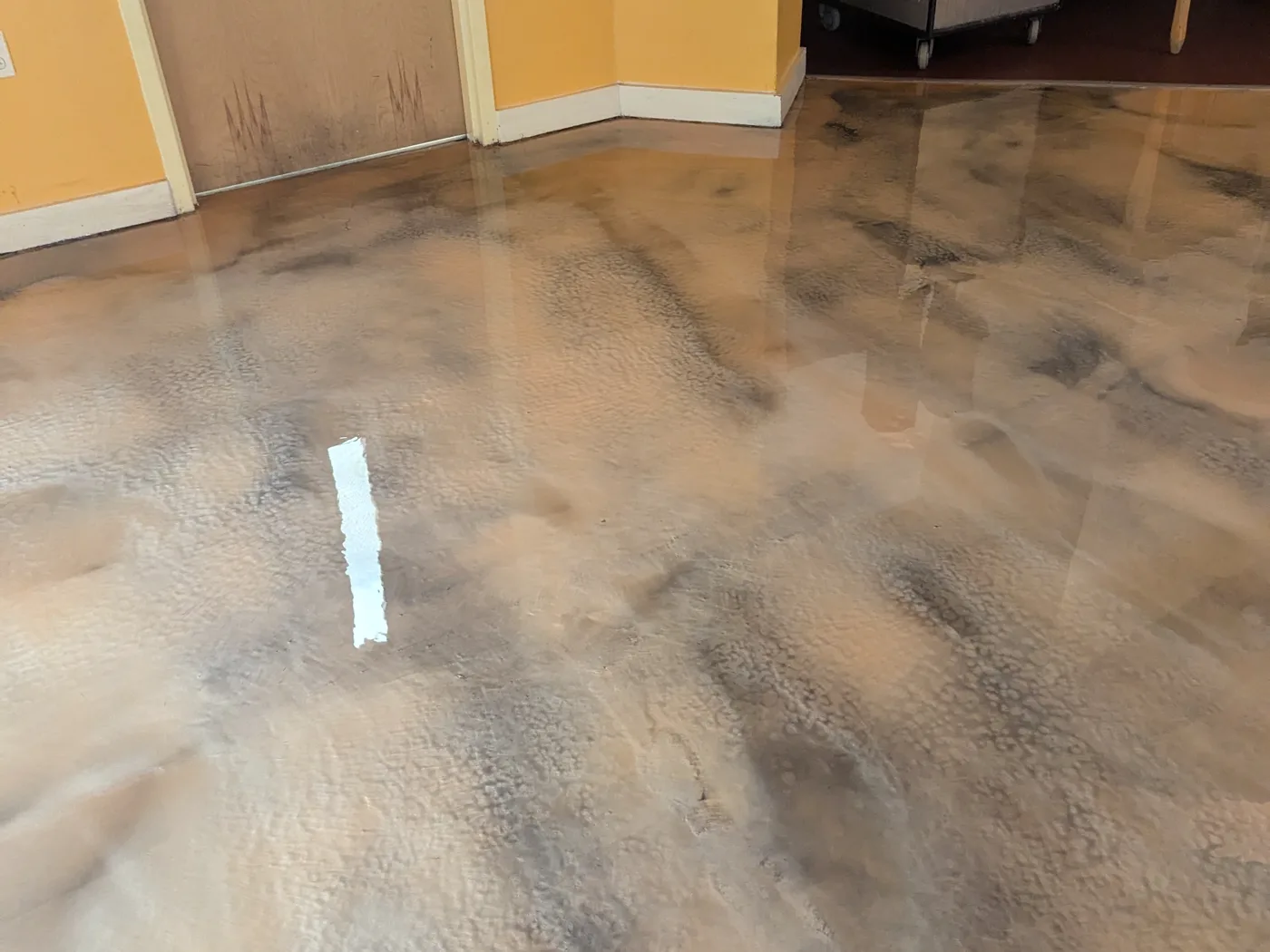
Metallic is a poor match for spaces chosen on performance. Where there is rolling or industrial traffic, chemical exposure, washdown, heavy grit tracked in, or a requirement for a specific texture, the system should be selected around that first.
A high-gloss surface also shows dust, scuffing and footprints sooner than a textured one, which is a maintenance question rather than a durability one.
Living with it
Day to day, a metallic floor is cleaned like any other sealed resin floor, and the finish coat sets what it will tolerate. Ask for that guidance in writing for the products installed.
Repair is the harder question. Because the pattern is continuous and was formed in place, a damaged area cannot be patched invisibly the way a flake floor often can. Significant damage usually means recoating a whole area rather than a spot.
Compared
Both are decorative layers inside a system, and both are sealed under finish coats. After that they diverge. Flake is broadcast media, so the appearance is largely predictable from the blend, it adds texture, and it hides marks. Metallic is formed in the liquid, so it is unrepeatable, smooth, and reflective.
Put simply: choose flake when you want a hard-wearing surface that forgives use, and metallic when the floor is meant to be a feature.
Checklist
A metallic proposal is easier to compare when it answers the same questions as the others.
Next step
Epoxy Pro Leads is an independent education and contractor-introduction resource. We are not the installer, we do not make coatings, and we do not price, specify or inspect your floor.
When you send a request we read the details, and where it is a fit we pass it to one contractor who works in your area and takes on that kind of project.
Related pages
The other common decorative approach, and a far more predictable one to specify.
Visit pageWhat happens to the slab before any decorative system goes down.
Visit pageWhen the environment matters more than the finish, start with the commercial framework.
Visit pageNext step
Share the project type, concrete condition, space use, and timeline so Epoxy Pro Leads can help route the request toward a qualified contractor conversation.
Submitting a request does not obligate you to hire a contractor.