
Concrete preparation
The wider picture: evaluating the slab, repairs, joints and everything else that happens before a coating.
Visit pageCommercial and industrial floor coating guidance, with residential garage flooring resources
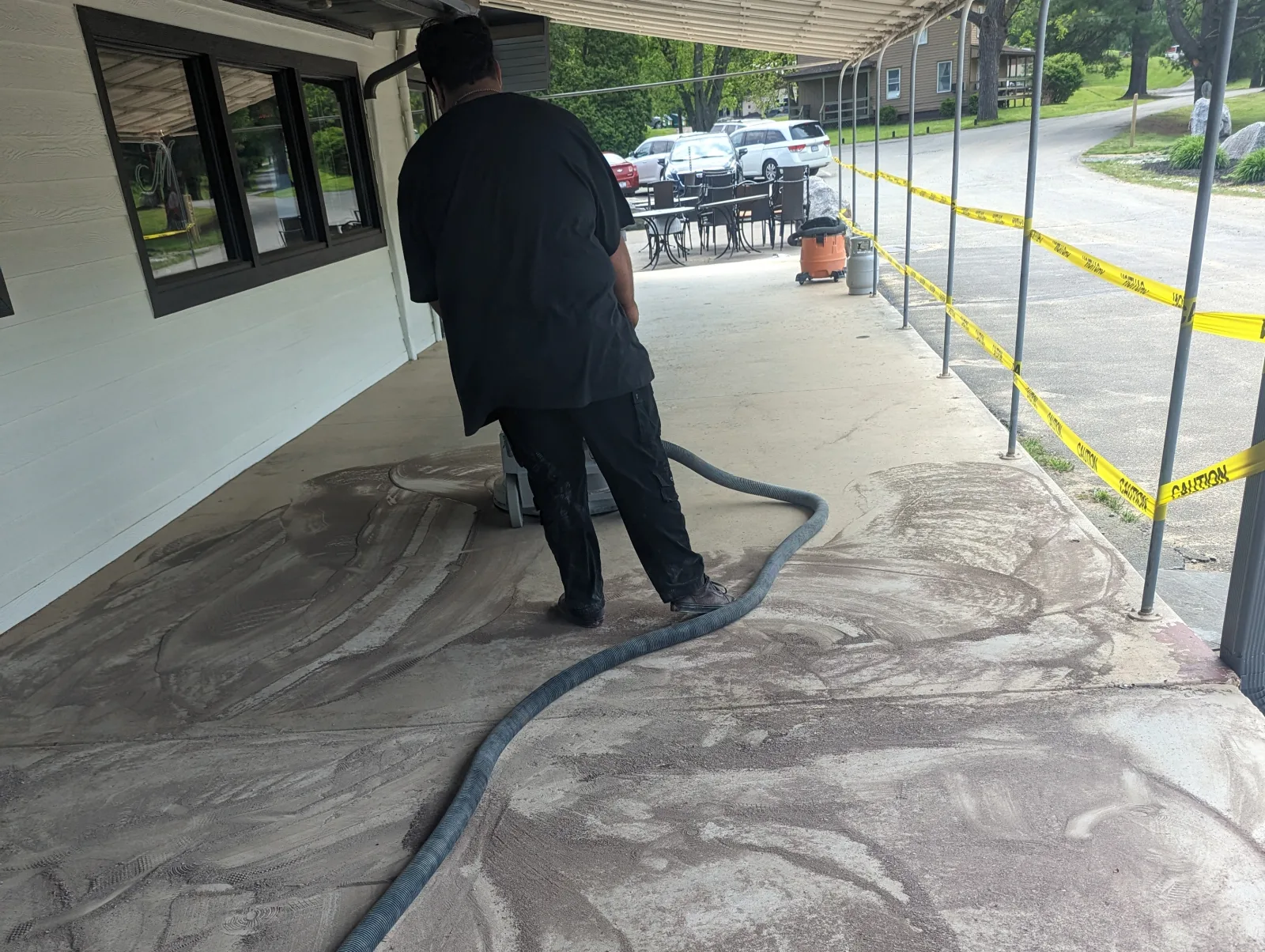
Mechanical preparation
Grinding is the machine work that takes a concrete floor from whatever it is now to something a new coating, or a new finish, can be built on. It removes material, and what it removes decides a good deal about the floor that follows.
Epoxy Pro Leads does not carry out this work. We explain how it is done and what separates one proposal from another, then connect owners and facility teams with contractors who do it.
Grinding is a way of removing material and opening the surface, not a single fixed procedure.
What it exposes can change the scope: cracks, soft concrete and old adhesive often only show once the surface is open.
It controls dust rather than eliminating it, which makes it a scheduling question as much as a technical one.
The process
Grinding passes rotating heads fitted with industrial diamond tooling across a floor, wearing away its surface under controlled conditions. Diamond is used because it cuts concrete reliably and the tooling can be changed for the job in hand, from aggressive removal to fine refinement.
The same family of machines does three quite different jobs. It prepares concrete for a coating, it removes what is already on the concrete, and it is the first stage of producing a polished floor. The tooling and the pace change from one to the next. The principle does not.
Why it is used
The top of a slab is often the weakest part of it. It can be closed by troweling, carry a curing compound or sealer, hold dust and residue, or have absorbed whatever has been spilled on it over the years. A coating placed on that layer is only as secure as the layer itself.
Grinding removes the unsound material, exposes concrete that is sound, and leaves a texture the coating can grip. That is what makes it the usual starting point for a professional floor coating, and the reason washing and light cleaning are not treated as equivalent.
Equipment
Large open floors are generally worked with walk-behind or ride-on grinders. Walls, corners, steps, thresholds and the ground around columns and drains need smaller hand-held grinders, because the big machines cannot reach them. That edge work takes time out of proportion to its area.
The diamonds sit in segments held by a bonding matrix. Harder and softer bonds, and coarser and finer diamond, behave differently on different concrete, so a crew will often change tooling during a job as the slab responds. A soft, weak surface and a dense, hard-troweled one do not wear the same way.
Scope
Grinding is effective on material that sits on or in the top of the slab.
Grinding is not a cure for everything found on a floor, and a proposal should not suggest otherwise.
Removal
Thick or poorly bonded coatings, heavy mastic and stubborn adhesive can load up grinding tooling and slow a job considerably. Contractors may take the bulk of the material off first by other means and use the grinder for what remains, which is one reason removal can appear as its own line in a proposal.
Some older adhesives and floor tiles have contained asbestos, particularly in older buildings. Where there is any chance of that, the material needs to be identified before anyone grinds it. Raise it early rather than finding out partway through.
The result
Surface profile is the texture grinding leaves. Concrete surface profile is commonly described on a scale published by the International Concrete Repair Institute, which runs from a nearly flat surface to a very rough one. A thin coating generally wants a finer profile than a thick, high-build system, and a profile that is too coarse for a thin coating can show through it.
The product data sheet states what the system being installed needs. A contractor should be able to tell you which profile they are aiming for and why, rather than describing the result only as ground.
Discovery
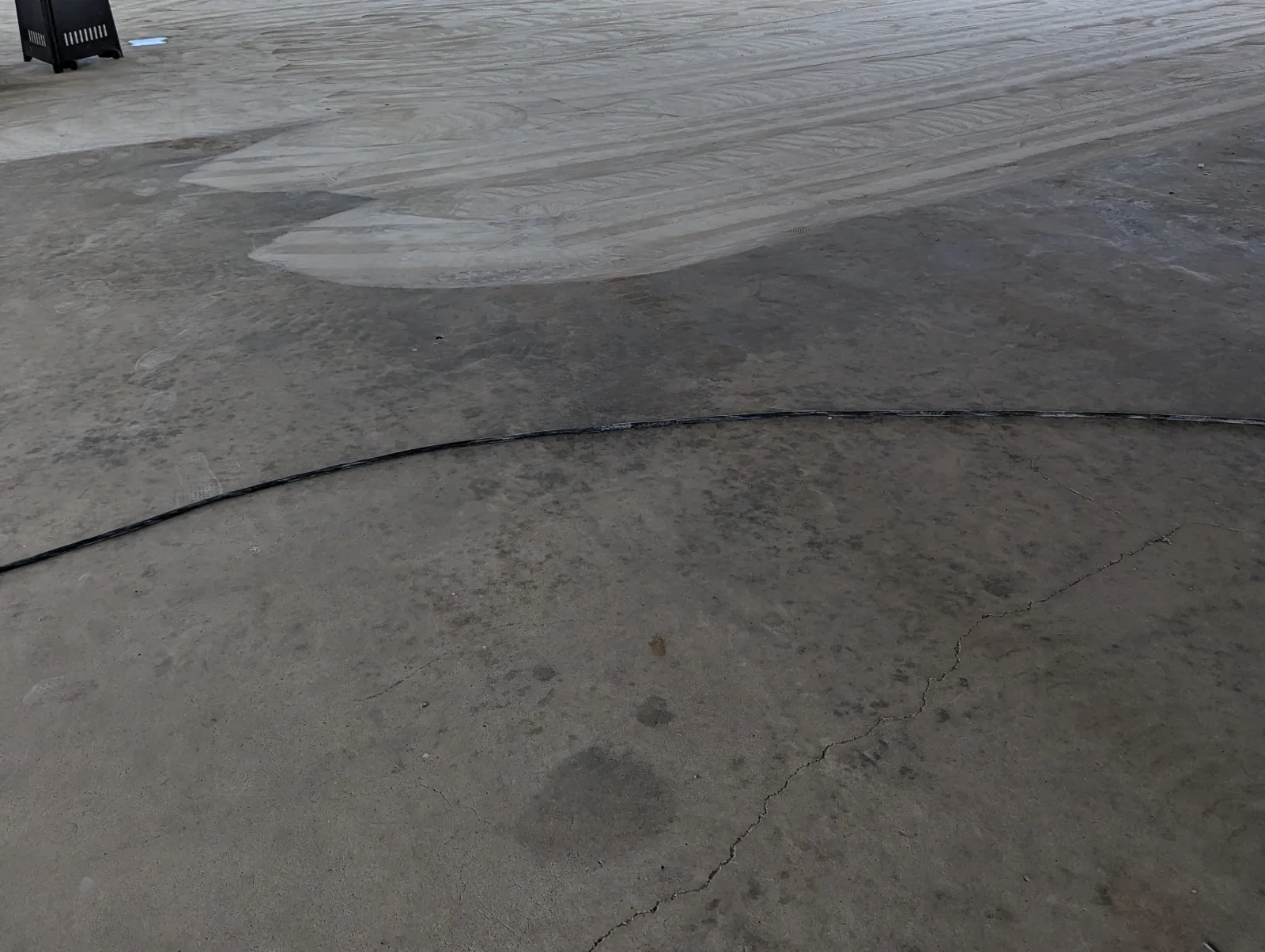
Grinding is the first proper look at the slab. Dirt, old coatings and stains hide cracks, soft areas, patches from earlier repairs and joints that have been filled badly, and removing them shows what the concrete actually is.
That is why an estimate given before the floor is opened is partly a prediction. A good proposal says what happens, and who decides, when the slab turns out to be in a different condition than expected.
Planning
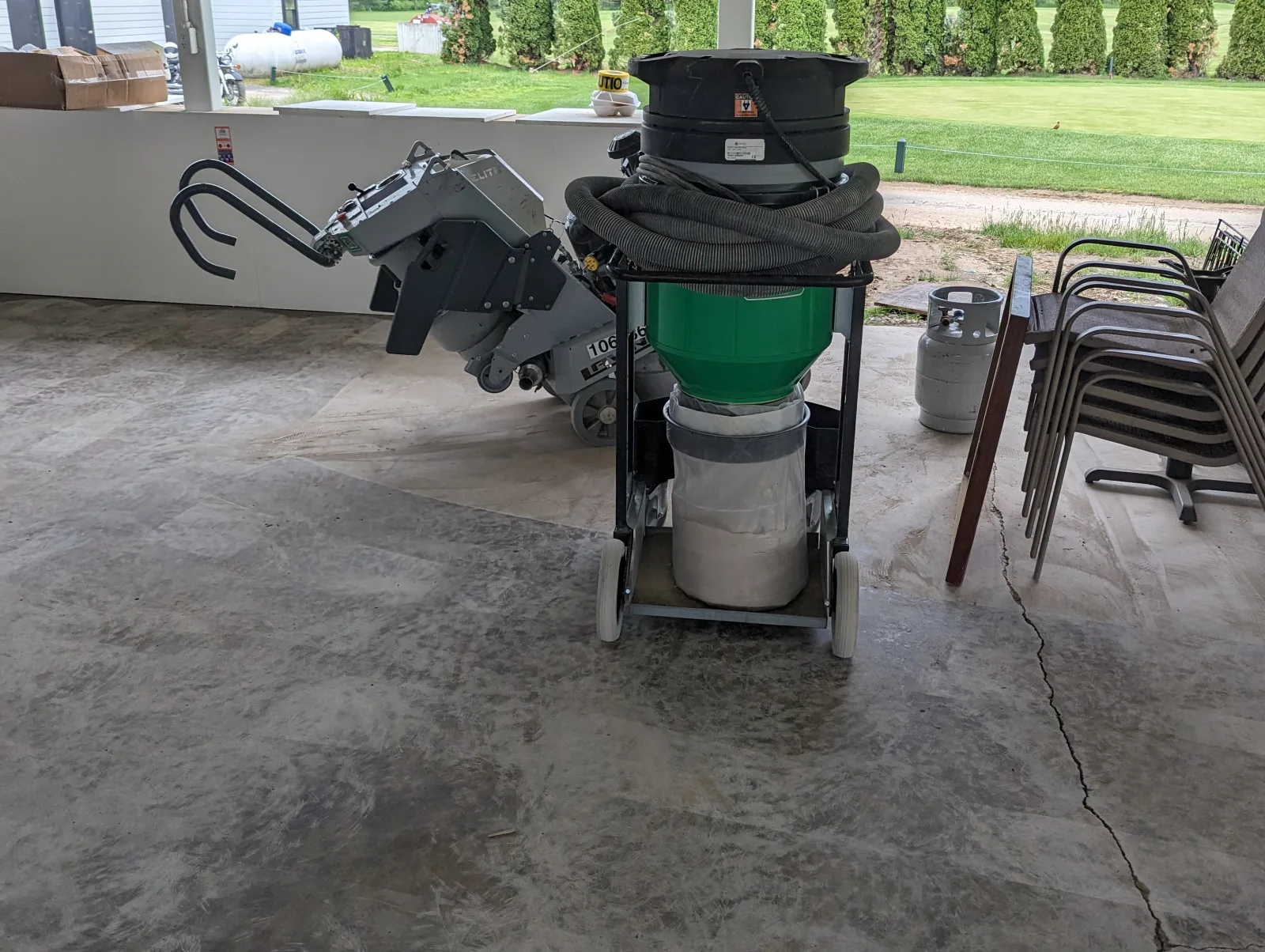
Grinding throws off fine concrete dust and it is loud. Shrouded machines connected to vacuum extraction capture most of the dust, and because it can contain respirable crystalline silica, extraction is treated as a standard part of the job rather than an accessory. Capture is never total, so the work needs to be planned around the building.
In an occupied building that makes grinding a scheduling question. Access, power, where equipment can be staged, which areas stay open, and whether the work happens at night or over a weekend are worth agreeing before a date is booked.
Comparison
Grinding is not the only way to treat a concrete surface, and the alternatives are not equivalent to it. Which one suits depends on the slab and on what is going on top of it.
Grinding and polishing
Grinding as preparation exists to make a surface that something else can bond to, and the floor is then covered. Polishing uses finer and finer tooling to refine the concrete itself until it is the finished floor. They share machines, but they have different goals, different tooling and different questions to ask.
Before the work
A proposal built on the actual floor starts with someone looking at it. These are the things worth expecting them to look at or ask about.
Checklist
Grinding is the part of a proposal you cannot inspect once the floor is finished, so it is worth reading closely.
Next step
Epoxy Pro Leads is an independent education and contractor-introduction resource. We are not the installer, we do not employ crews, and we do not price, specify or inspect your floor.
When you send a request we read the details, and where it is a fit we pass it to one contractor who works in your area and takes on that kind of project. Submitting a request does not commit you to anything.
Related pages
The wider picture: evaluating the slab, repairs, joints and everything else that happens before a coating.
Visit pageWhere the concrete itself becomes the finished floor, and what changes in the process when it does.
Visit pageWhat goes wrong when a coating was laid over a surface that was never properly opened up.
Visit pageNext step
Share the project type, concrete condition, space use, and timeline so Epoxy Pro Leads can help route the request toward a qualified contractor conversation.
Submitting a request does not obligate you to hire a contractor.